Toilets of Arts and Letters:
Artists, Authors, Musicians, and Educators
Toilets of Arts and Letters:
Artists, Authors, Musicians, and Educators
Authors including Kipling and Chekov have written about toilets and sanitation. Here you can see the actual toilets and other plumbing used by figures from literature, music, and science. Edgar Allan Poe, Vincent van Gogh, Jim Morrison, Tom Wolfe, Hunter S. Thompson, and others, including scientists and other academicians at major universities. Click on any of the pictures or links to be taken to detailed explanations with more pictures.
Amazon
ASIN: 0679435921
Rudyard Kipling thought that sewers were more compelling than literature. He wrote in 1886 that drains are "a great and glorious thing, and I study 'em and write about 'em when I can." He wrote that a decent primer on sanitation "is worth more than all the tomes of sacred smut ever produced."
Anton Chekov wrote about the awful lack of sanitation on the island of Sakhalin off Russia's far eastern coast.
The architect Le Corbusier said that the toilet is "one of the most beautiful objects industry has ever invented."
Amazon
ASIN: B004WLPSJQ
Amazon
ASIN: 0486253325
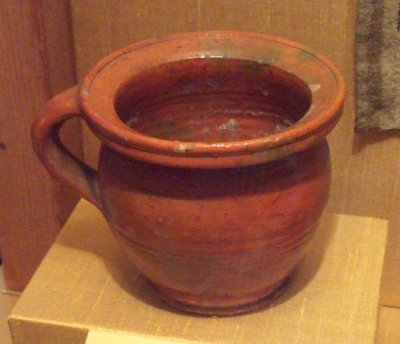
Shakespearean Chamber Pot
ShakespeareanChamber Pot
This Shakespearean chamber pot is not The Bard's Own Thunder Mug, but it is a typical English chamber pot from around 1600. This one was brought from England to the English colony at Jamestown, Virginia.
See the dedicated page for further details on this chamber pot.
Edgar Allan Poe's Washbasin
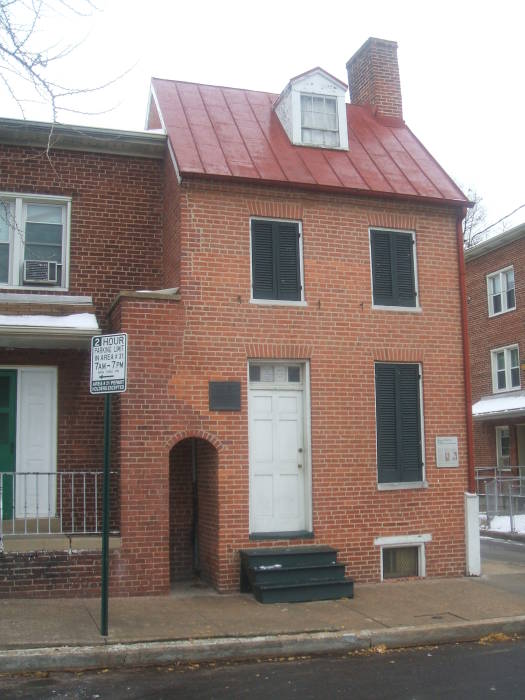
Edgar Allan Poe moved to Amity Street in West Baltimore in 1832. The home was outside the city then. Now it's in the middle of a pretty awful urban setting. He won an 1833 literary contest for his story MS. Found In A Bottle. In 1835, he married his young cousin Virginia.
Edgar and Virginia Poe, with mother-in-law in tow, later moved to New York. In October, 1849, Poe was passing through Baltimore. On the night of the 3rd, he was found on the streets delirious and "in great distress, and in need of immediate assistance." He was taken to a hospital, where he died on the morning of the 7th without becoming coherent enough to explain how he had gotten into his dire state or why he was wearing someone else's clothes. Delirium tremens, heart disease, epilepsy, syphilis, meningitis, cholera, and rabies have all been blamed.
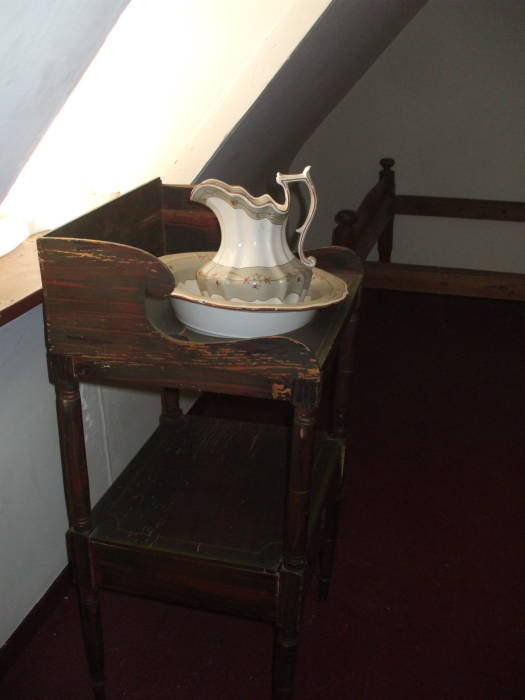
American homes did not have indoor plumbing in the 1830s. The Poes would have had chamber pots in the bedrooms and possibly a privy out back. But given the dire financial situation of the Poes, their privy may not have been much.
Poe's WashbasinHere you see a specially made wash stand holding a ceramic bowl and pitcher in the small bedroom on the top floor. This was the state of the art of indoor "plumbing" in America in the 1840s.
The detailed Edgar Allan Poe page has more details on Poe's life and their home in Baltimore.
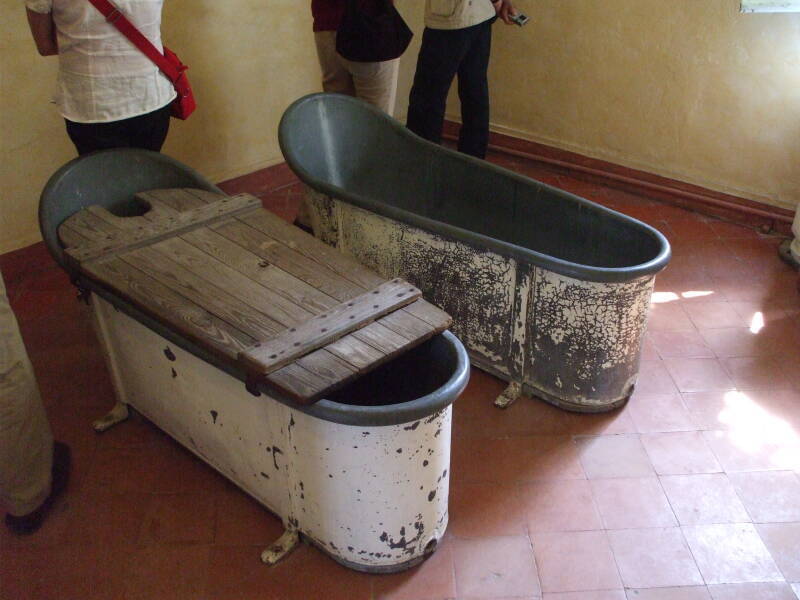
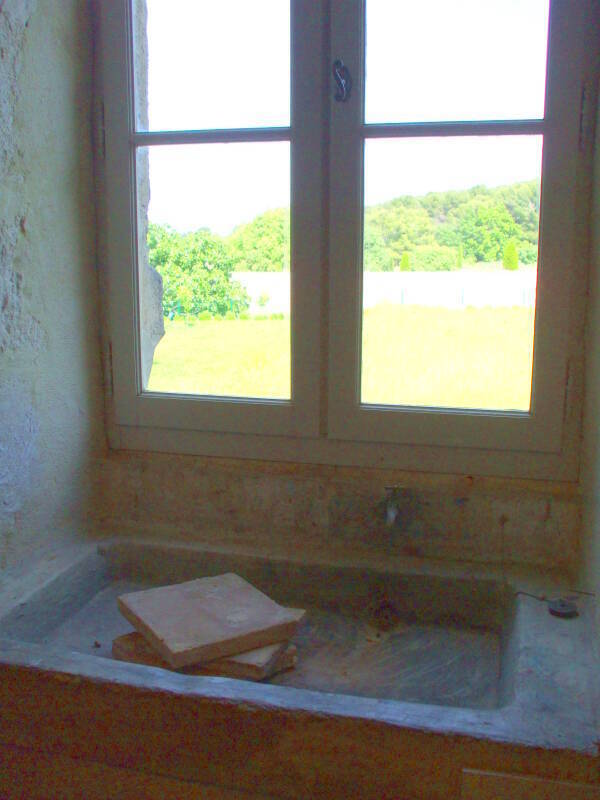
Vincent Van Gogh's Sink and Hydrotherapy Tub
Vincent Van Gogh's Sink and Hydrotherapy TubVincent Van Gogh voluntarily committed himself to a mental institution in Saint-Rémy de Provence, not far to the north-east of Arles, in southern France. He produced 150 paintings during his one-year stay in this hospital.
Mental health care was very primitive in those days, and featured "hydrotherapy". The patient was physically restrained in a tub and doused with streams of cold water.
See the dedicated page for more details.
William Randolph Hearst's Toilets, Sinks, Showers, Fountains, and Pools
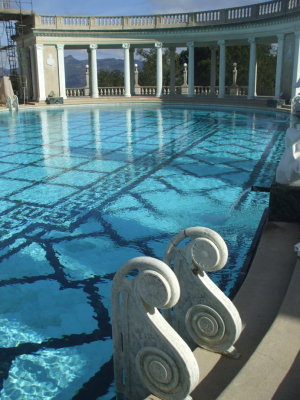
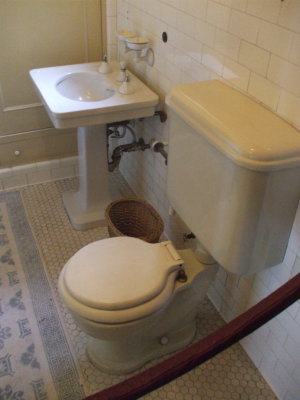
William Randolph Hearst's Toilets, Sinks, Showers, Fountains, and PoolsHearst Castle, the mountaintop estate of publishing mogul William Randolph Hearst, features indoor and outdoor pools, ornate fountains, and, of course, toilets, sinks, showers, and tubs.
Among other accomplishments (like being the co-instigator of the Spanish-American War), Hearst was a publishing mogul, with the largest newspaper and magazine empire of his time. Hence his inclusion here, filed under Arts and Letters.
Jim Morrison's Bidet
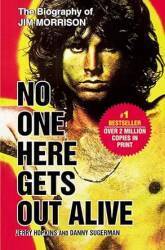
Amazon 0446697338
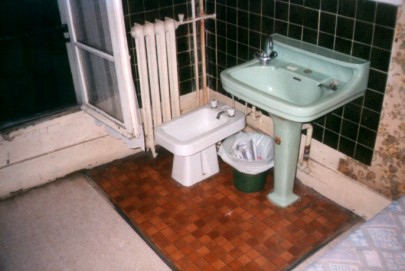
I once stayed at the Hôtel de Medicis in the Latin Quarter of Paris.
Some time later I learned that I had stayed in a nearly identical room just upstairs from where Jim Morrison stayed in 1971!
As you can see here, the bidet provides a fine view out the nearly floor to ceiling window of the room.
Jim Morrison'sBidet
See the dedicated page for more pictures and details of the room and its plumbing, and Jim Morrison's time in Paris.
Tom Wolfe Cops a Urination
Tom Wolfe wrote The Electric Kool-Aid Acid Test in 1968, a "non-fiction novel" describing Ken Kesey, author of One Flew Over The Cuckoo's Nest and other works, and his Merry Pranksters, a group of friends who lived communally and experimented with and promoted the use of psychedelic drugs.
Amazon
ASIN: 031242759X
They purchased a 1939 International Harvester bus in 1964, stripped it down, remodeled it inside, gave it a psychedelic paint job outside, and named it "Furthur". They then went on an expedition from California to New York and back.
Tom Wolfe onToilets and the
Counterculture
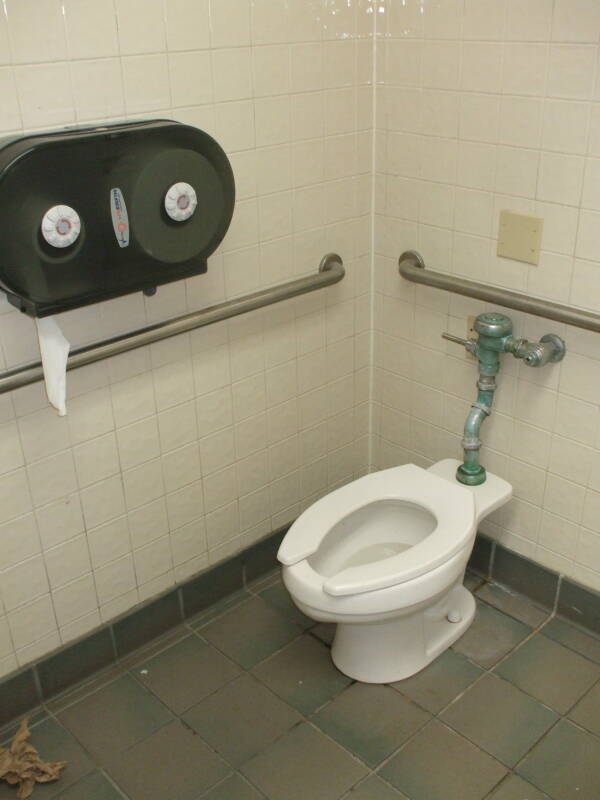
Wolfe describes how the Merry Pranksters would swarm into a gas station and overwhelm its plumbing facilities. These days they would use truck stop toilets like this one.
See the dedicated page for another picture, more details, and two excerpts of Tom Wolfe's toilet-related writing.
Hunter S. Thompson's Urinal
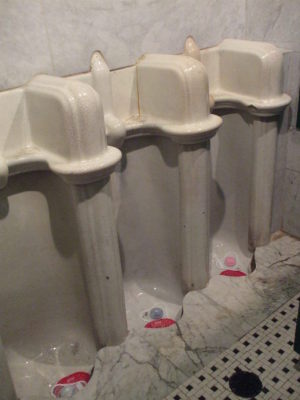
Hunter S. Thompson hung out at McSorley's Irish Bar in the East Village of New York when he lived there in the late 1950s and early 1960s.
Hunter S. Thompson'sUrinal
See the dedicated page for more pictures of McSorley's and more details of Thompson's time in New York.
William S. Burroughs on the Limits of Power
Surrealist writer William S. Burroughs wrote an essay "A Word to the Wise Guy" in which he discusses the limits of supposedly absolute power.
He uses the position of the Commissioner of Sewers for St. Louis to explain this. The immediate idea is that there would be little to do to hold on to this position of some limited power, so you could largely do as you please and abuse that power.
But the problem is how you initially got that position and power and how you hold on to it.
William S. Burroughson the Limits of
Sewer Commissioner Power
Getting, and especially maintaining, the position of power means a loss of freedom. The greater the power of the position, the more complete the loss of freedom.
It's bad enough if you were to be the Commissioner of Sewers, it would be far worse if you were President of the United States.
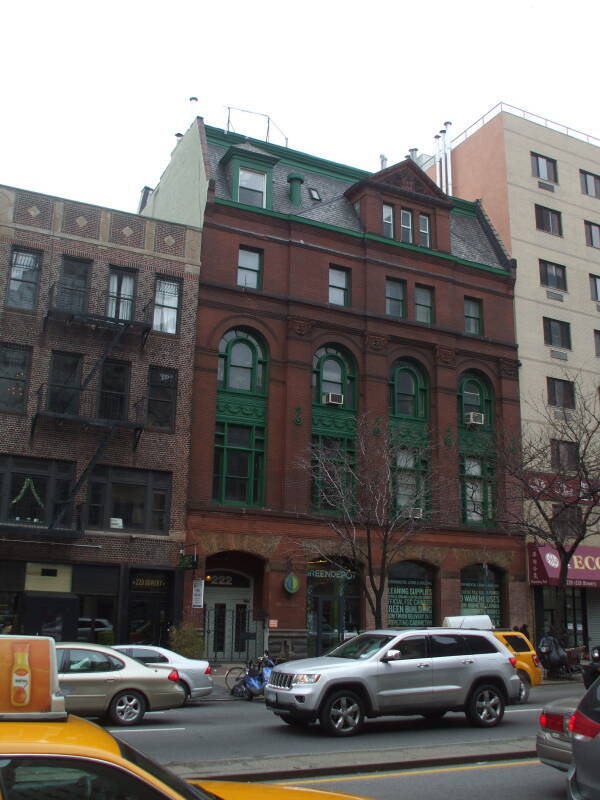
Exterior of "Tne Bunker", 222 Bowery, William S Burroughs' home in a former YMCA.
Sebastian Junger's Toilet
Prominent non-fiction writer Sebastian Junger is part owner of the Half-King Pub in New York. It's at 505 West 23rd Street, at 10th Avenue.
Sebastian Junger'sToilet
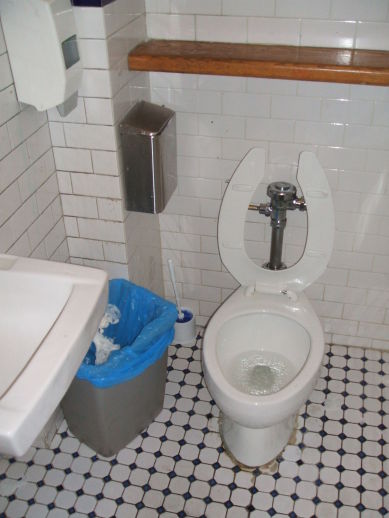
As this is the men's toilet at the Half King, Sebastian Junger is part owner of this toilet.
The dedicated page has more about the pub and Junger.
Movie Stars
Movie stars aren't like you and me, and that includes their toilets. See the special trailers that bring movie star toilets to filming locations.
The glamour of Hollywood!
Peeing Figures in Artwork
European art has depicted urinating figures since the 1200s. Originally these were cherubs, young boys as angels, spraying their urine over saints and festivals.
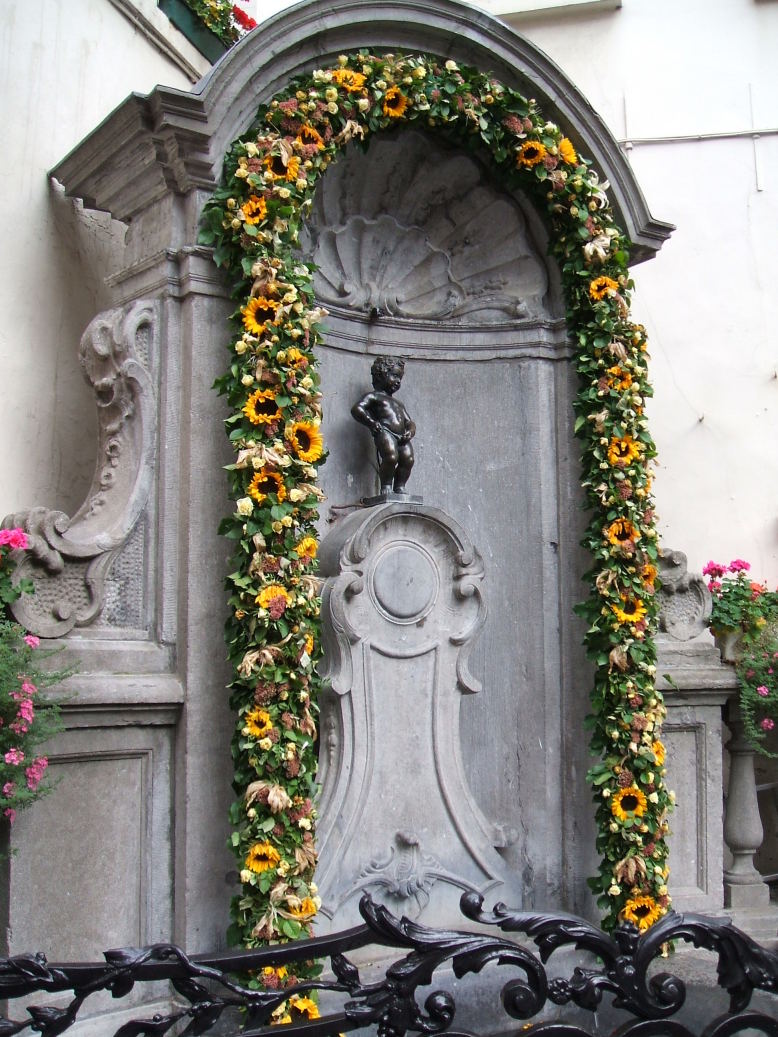
One example is the famous Mannikin Pis or Peeing Boy statue. That's right, this small statue is one of the most popular tourist attractions in Belgium.
Mannikin Pis has recently been joined by Jeanneke Pis and Zennike Pis, statues of a girl and a dog, all plumbed for realistic operation.
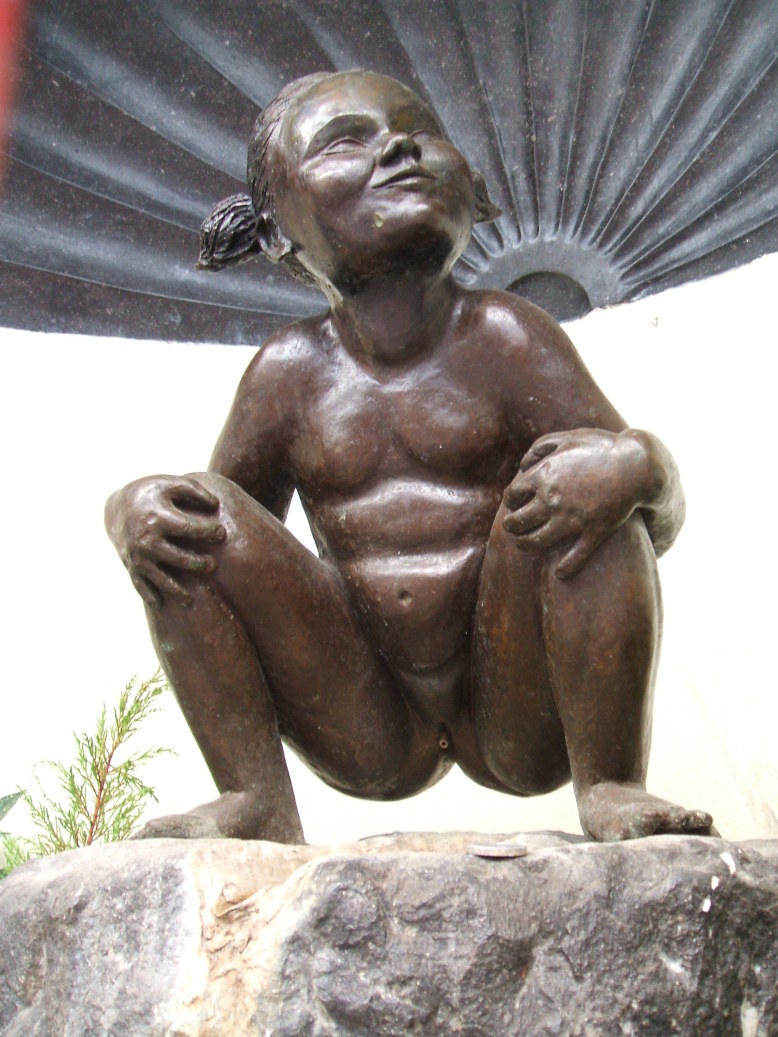
in European Art
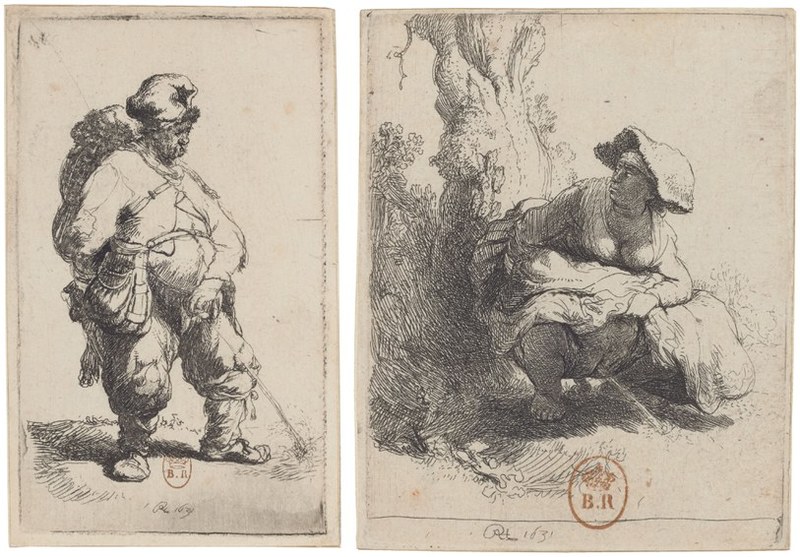
Starting in the 1600s, when art expanded from the church to depict everyday topics, great artists including Rembrandt van Rijn depicted people urinating and defecating as part of their day-to-day life.
This continued through the 1800s, with Paul Gauguin perhaps capturing the last artistic imagery of innocent bladder-voiding in Tahiti.
In the late 1800s the public toilet was finally returning to European civilization, allowing people to urinate and defecate in private. Now that urinating was supposed to be done in private, its depiction became eroticized.
Trompe l'Oeil Toilets
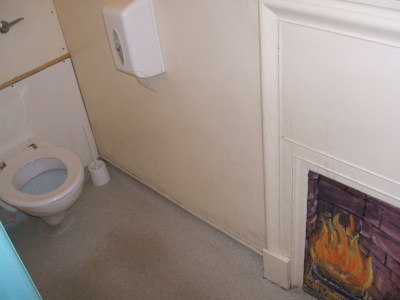
Trompe l'Oeil means "Trick of the Eye", and is a style of art based on convincingly realistic rendering.
Trompe l'oeil toilets would then be a toilet using some form of visual illusion. For example, this toilet at the Castle Rock hostel in Edinburgh, Scotland that appears to have a fireplace.
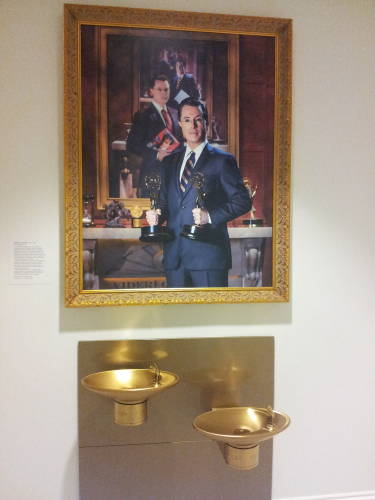
Or, this painting of Stephen Colbert, which was exhibited for a while next to one set of restrooms on the ground floor of the Smithsonian American Art Museum in Washington, D.C.
Trompe l'OeilToilets
The portrait shows him standing in front of a fireplace, over which is a portrait showing him standing in front of a fireplace, over which is a portrait of him. Double trompe-l'oeil!
The Trompe l'Oeil Toilet page has more pictures and details about the Colbert portrait and other illusions somehow related to toilets and other plumbing.
Toilets of Higher Education
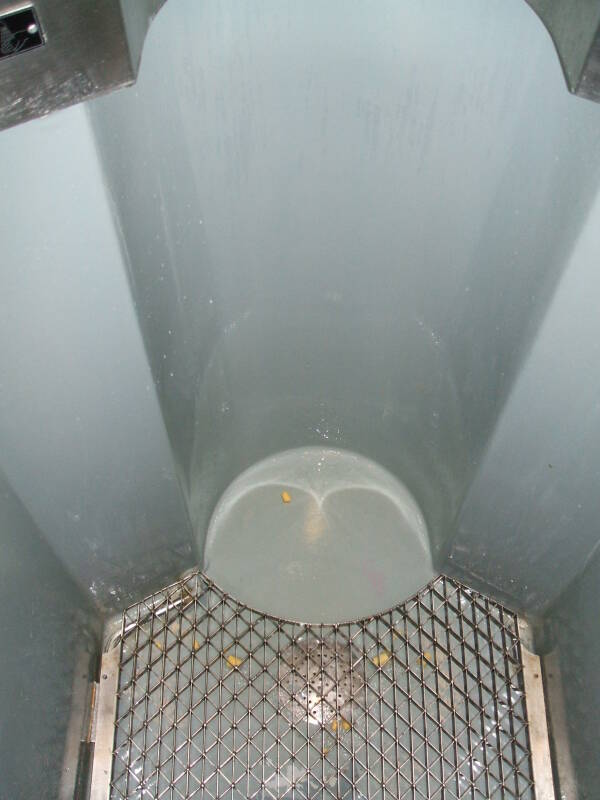
Universities provide many examples of both mundane and unusual toilets. What are those strange fixtures at Purdue University, are they urinals or are they toilets?
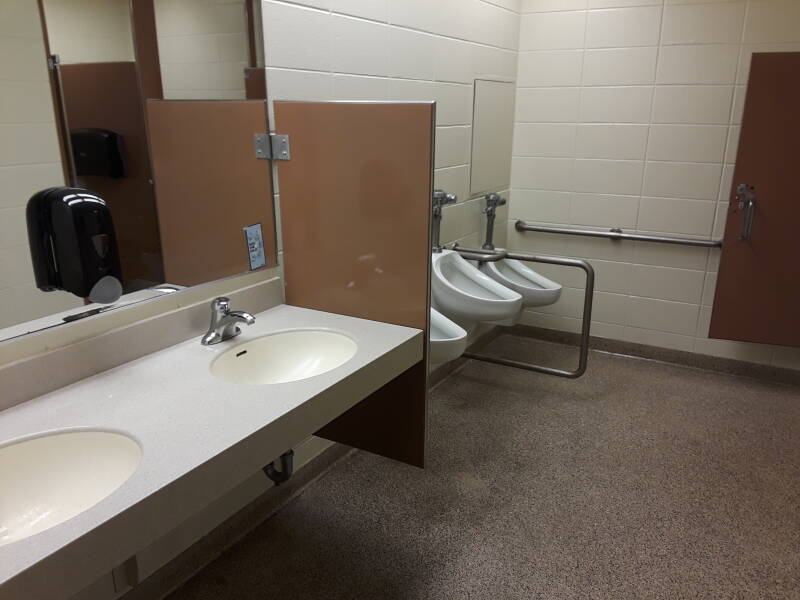
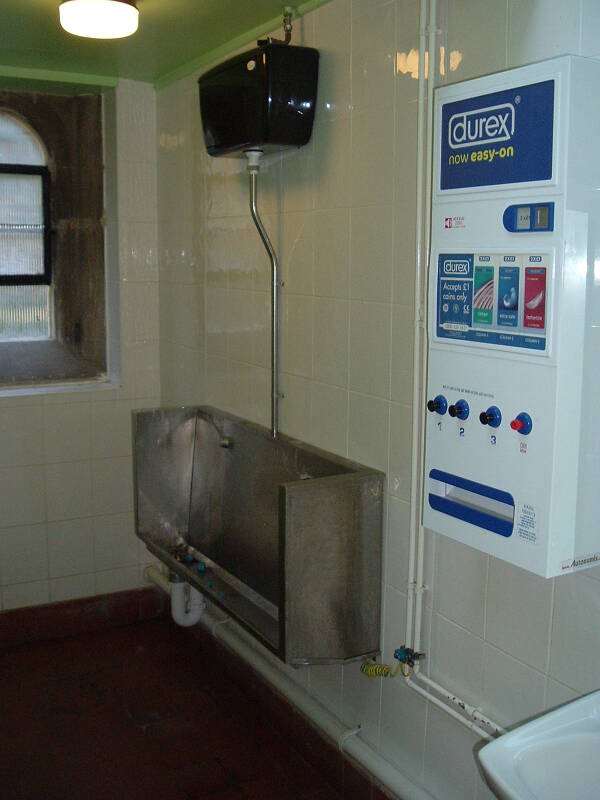
And what about the complicated modern toilet found on the campus of Cambridge University? Stephen Hawking was on the faculty, and that contraption is not wheelchair accessible!
Higher
Education
The Toilets of Higher Education page contains further examples from Purdue, including its Secret Staff Bathroom, plus further examples from Oxford University, the Massachusetts Institute of Technology, and Harvard University.
Toilets as Modern Art
Marcel Duchamp's Fontaine is on display at the Centre Pompidou in Paris, one of the world's major museums of modern art.
In 1917 Duchamp laid a urinal flat, signed it "R. Mutt", and called it an art piece. It was submitted to an exhibition but not accepted, and the original was lost. Then, in the 1960s, he was commissioned to make a number of replicas.
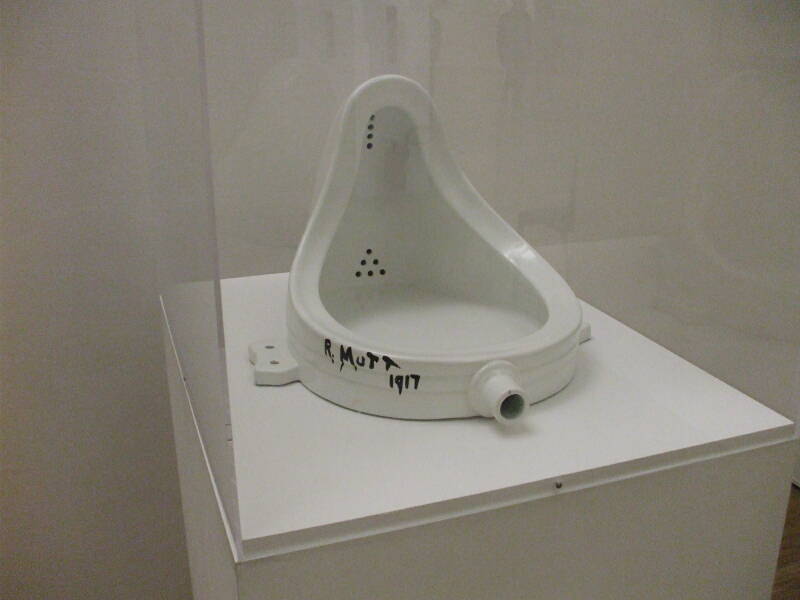
A number of performance artists have staged "interventions" physically attacking the pieces. One used a hammer, the others used a more obvious and relevant form of assault.
The art toilet page contains more information on the piece Fontaine as well as an example of modern architectural design for a modular bathroom, also on exhibit at Centre Pompidou.
Toilets asModern Art
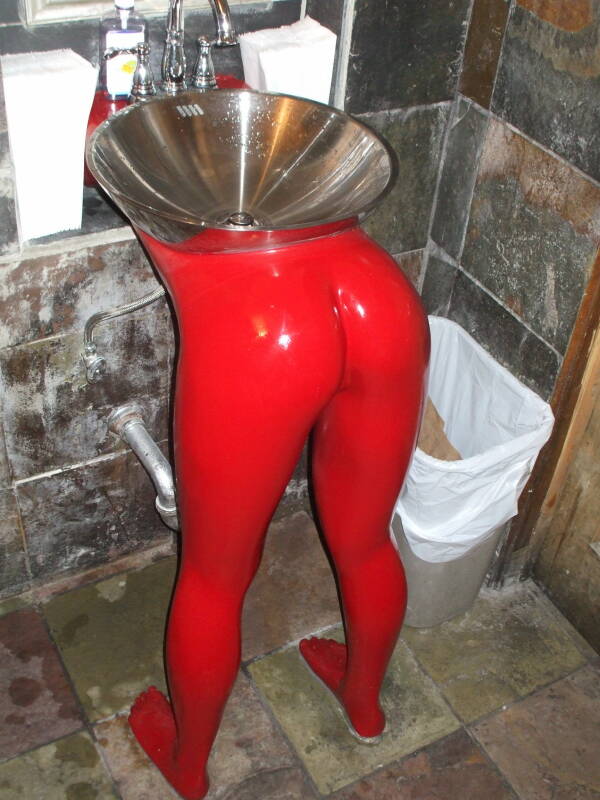
The American toilet page features some interesting anthropomorphic plumbing at the Mehanata Bulgarian bar on the Lower East Side in New York.
Lady Gaga's Toilets
Johnson's Bar on Rivington Street just off Essex Street on the Lower East Side in New York is a favored hangout of Lady Gaga. She has mentioned Johnson's and other Lower East Side locations in a number of her songs. She once had an apartment on Stanton Street, just a block to the south.
Lady Gaga'sToilets
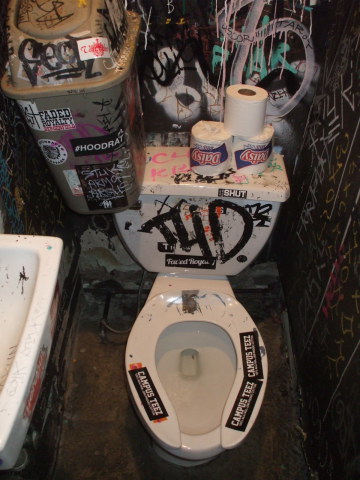
This is one of the two toilets at Johnson's, see the dedicated page for the other toilet, one of the sinks, and more details about Lady Gaga and the Lower East Side (and its toilets).