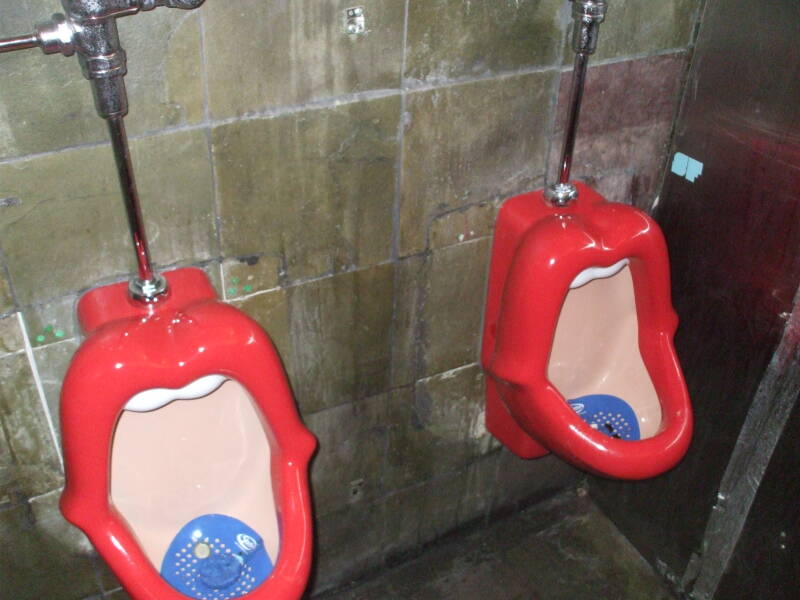
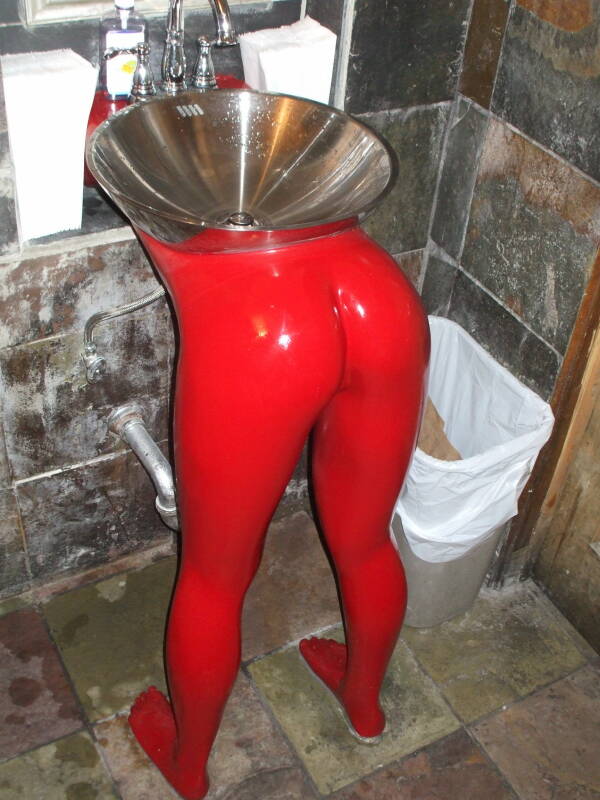
Българските Тоалетни — Bulgarian Toilets
Bulgarian Toilets
What are the toilets like in Bulgaria? They're nice! A surprising number of bathrooms include vessel sinks and other quite stylish features. There are a few old and unrenovated bathrooms to be found, but most of what you encounter as a visitor to Bulgaria is likely to be nicer than what you're used to at home. Keep reading for see pictures and descriptions of toilets, sinks, and showers in hostels, restaurants, and on board trains connecting to Romania, Turkey, and Greece. But first, let's see how to find the bathroom.
Bulgarian Toilet Logistics
| women | жени | zheny | D |
| men | мъже | muzhe | M |
| Where is the toilet? |
|
Къде
е
тоалетната?
Kahde e toaletnata? |
Bulgarian toilets are typically labeled жени or мъже, or sometimes with a Latin script D or M.
See my travel pages for details on going to Bulgaria and experiencing Bulgarian plumbing in person:
София / Sofia
This is a very nice bathroom at Be My Guest hostel in Sofia, Bulgaria.
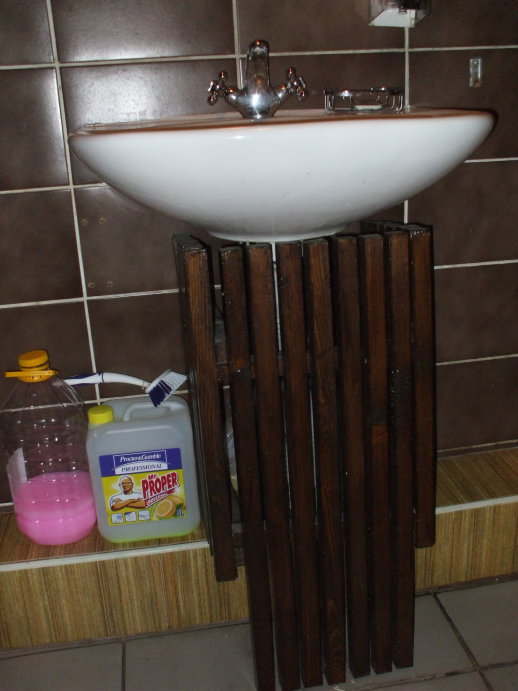
Check out the stylish vessel sink. These became a trend in the early 2000s. Some are made of glass, others of ceramic or metal as seen here. Vessel refers to the construction, like a bowl placed on a counter. It can be more practical, as you get more counter space in the same overall area if you can use the parts of the flat surface overhung by the bowl of the sink.
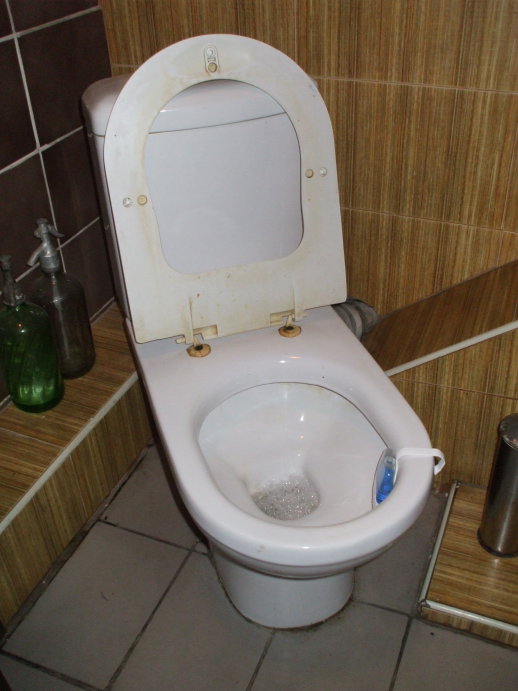
This hostel is a great place to stay — there are a couple of private rooms with their own bath down on the main floor, and a loft with mattresses up in the attic. This is the bathroom up in the loft.
13 улица
Иван
Вазов
(ulitsa Ivan Vazov)
Sofia
+359-2-989-50-92, +359-2-980-21-42,
bemyguest@abv.bg
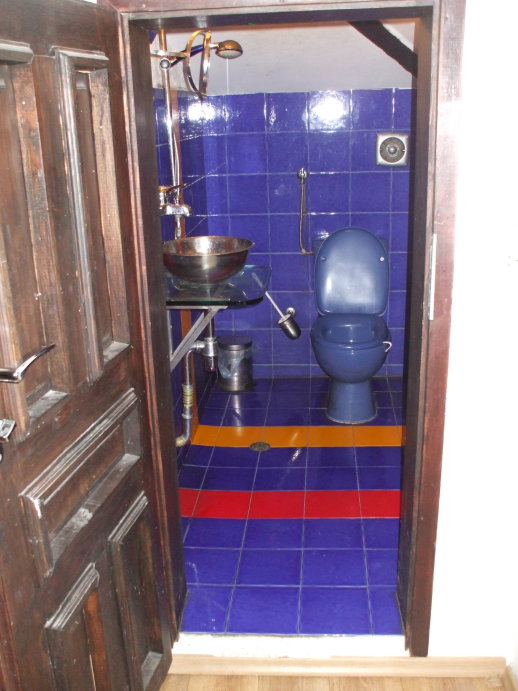
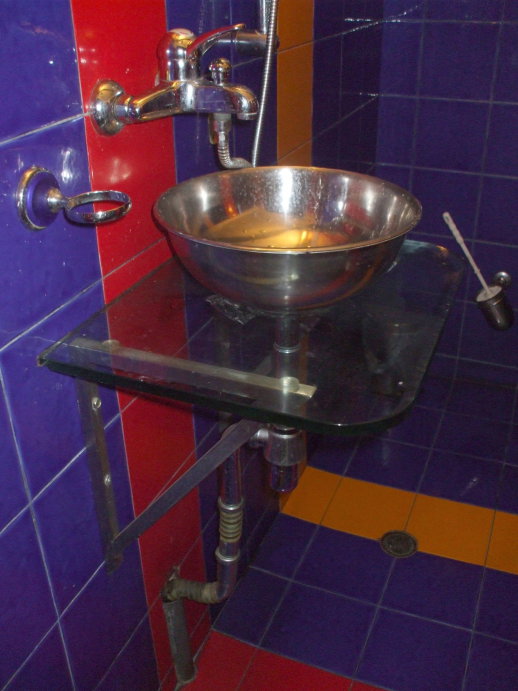
This is the bathroom down on the main floor at Be My Guest hostel.
Велико Търново / Veliko Târnovo
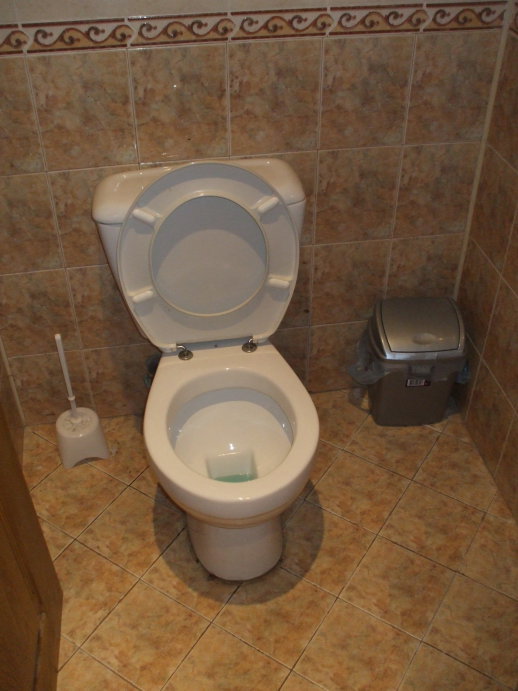
Here is one of the very nice bathrooms at Hostel Mostel in Veliko Târnovo, the old capital of the Bulgarian Empire and an important educational and cultural center of today's Bulgaria.
Hostel Mostel
13 улица
Йордан
Инджето
(ulitsa Iordan Indzheto)
+359-897-859-359
http://hostelmostel.com/
How is the second word of the city's name spelled: "Târnovo", or "Tarnovo", or "Tornovo", or "Turnovo"? It's really spelled Търново but transliterating properly spelled Bulgarian using the Cyrillic character set into the Latin character set is an approximate process.
There has been a settlement there since the third millennium BC. It was the strongest Bulgarian fortification in the 12th through 14th centuries, and the heart of the Second Bulgarian Empire. It was known just as Târnovo back then.
The Byzantine Empire, based in Constantinople, weakened through the 14th century before falling to the Ottoman Turks in the middle of the 15th century. Tarnovo claimed to be the Third Rome given its influence over the mostly Slavic speaking Orthodox world.
It was finally captured by the Ottoman Empire in 1393. It was known as Търновград (Tarnovgrad) during the Middle Ages. It was a site of two uprisings against Ottoman rule, in 1598 and 1686. It was finally liberated from 480 years of Ottoman rule by the Russian general Joseph Vladimirovich Gourko in 1877.
In 1879, the first Bulgarian National Assembly met in Tarnovo to ratify the first Bulgarian constitution. Then, in 1908, Tsar Ferdinand Saxe-Coburg Gotha declared the complete independence of Bulgaria at the Saint Forty Martyrs' Church.
The city was renamed in 1965 to Велико Търново, Veliko Târnovo, or Great Târnovo, to commemorate its importance in Bulgarian history.
This bathroom at the Shtastlivetsa (or Lucky Man) restaurant in Veliko Târnovo had me thinking that I was in Greenwich Village, not in central Bulgaria.
Lonely Planet is intimidated by its name, saying that it's a great restaurant (which is true!) with an "impossible to pronounce" name (not true!).
It's not hard at all to pronounce. Щастливеца, just like it's spelled. You see, in Bulgarian Щ is pronounced sht, and not shch as in Russian.
And it's another one of those stylish vessel sinks!
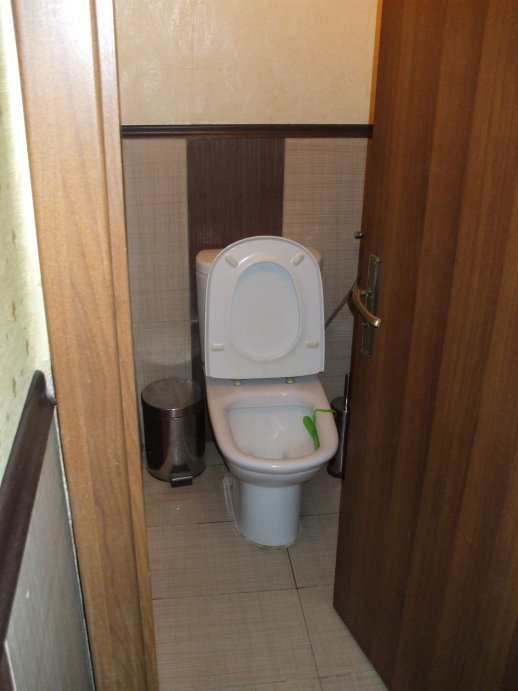
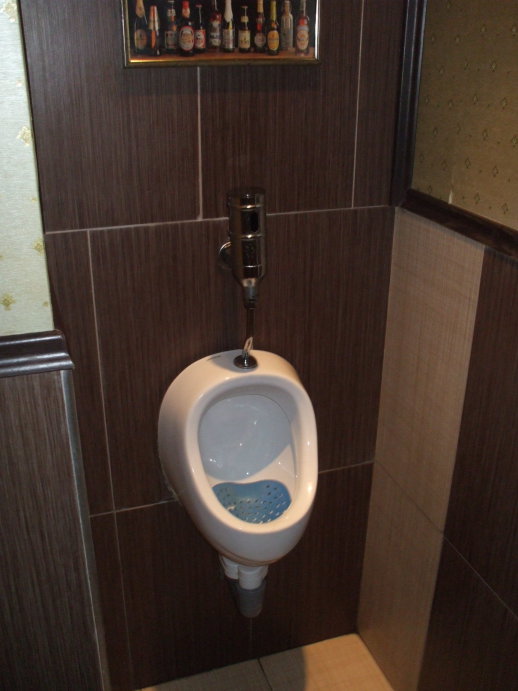
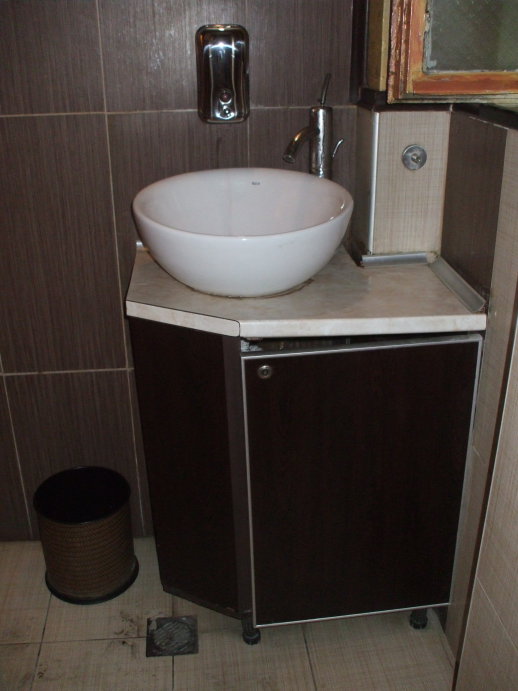
As you can see from everything so far, today's Bulgarian toilets tend to be quite nice. I had expected the toilet situation in Bulgaria to be somewhat grim, but things were quite nice.
However, things may have been different in the recent past. This is a public toilet in Veliko Târnovo. Notice that it's now barred off. I took the interior pictures through the broken glass doors.
If you're looking for grim toilets from Bulgaria, this retired facility is all that I have.
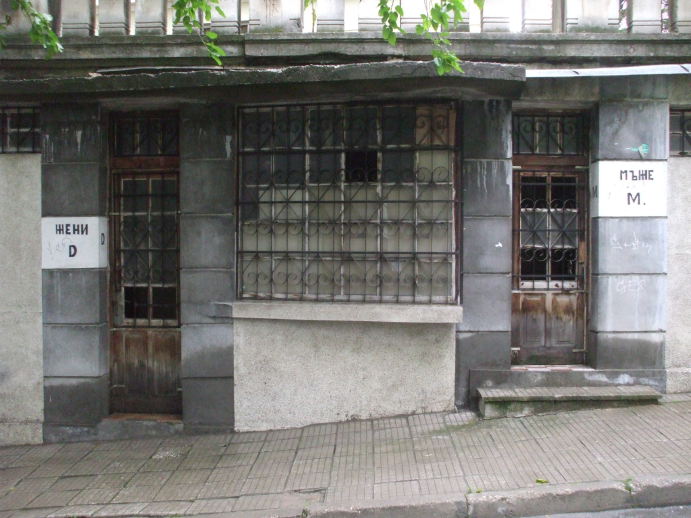
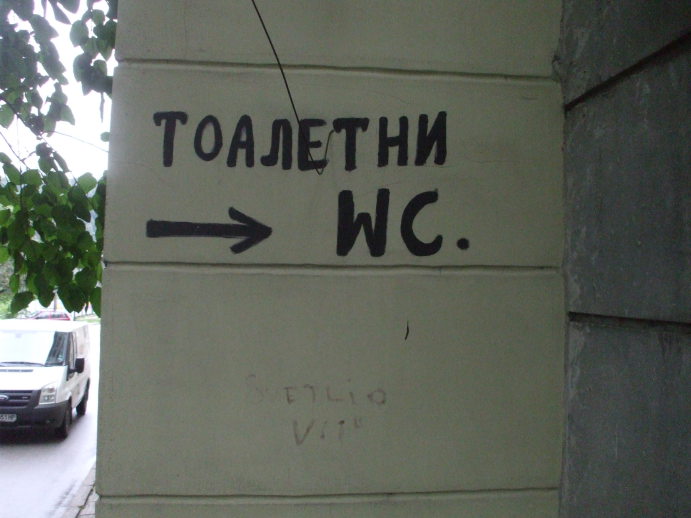
тоалетни = toaletny = toilets
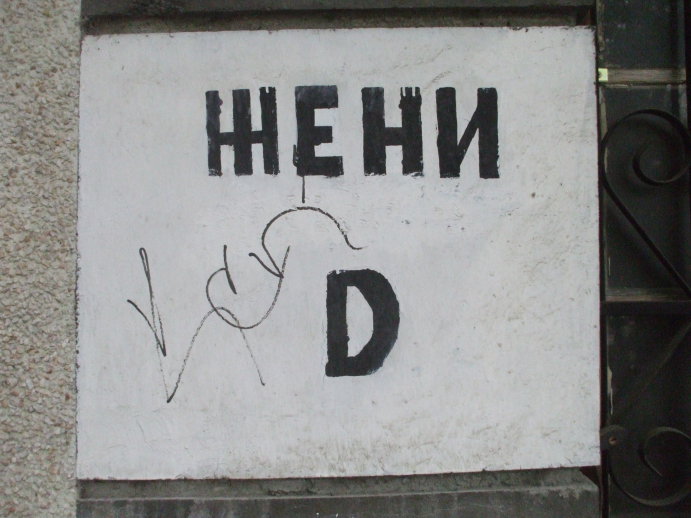
жени
=
zheny
= women
A Latin "D" is also used in Bulgaria.
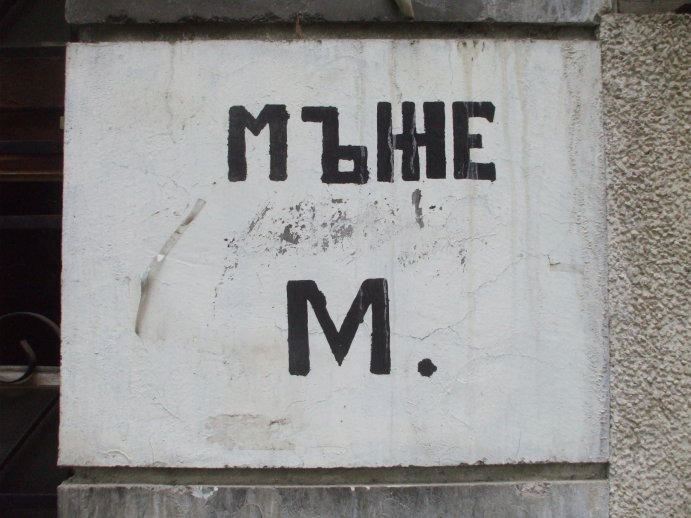
мъже
=
muzhe
= men
A Latin "M" is also used in Bulgaria.
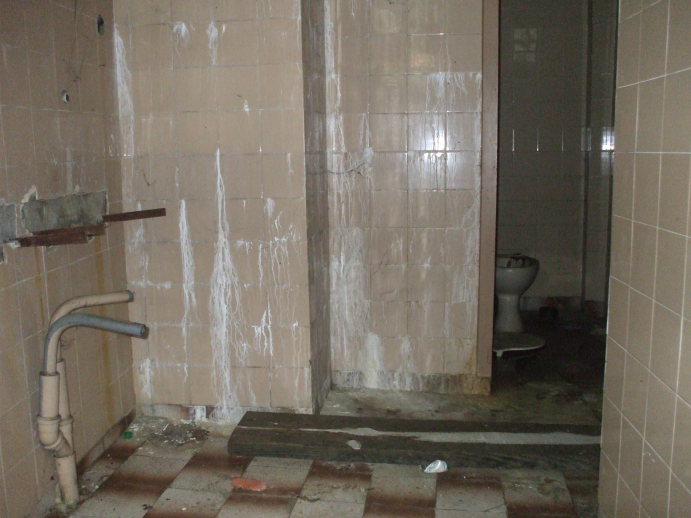
жени interior.
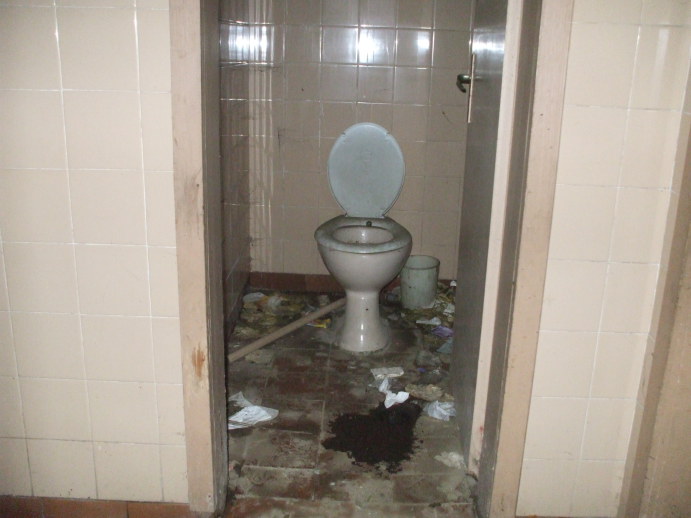
мъже interior.
Влаки / Trains
This is on board the overnight train from Thessaloniki, Greece, to Sofia.
Seat down, seat up.
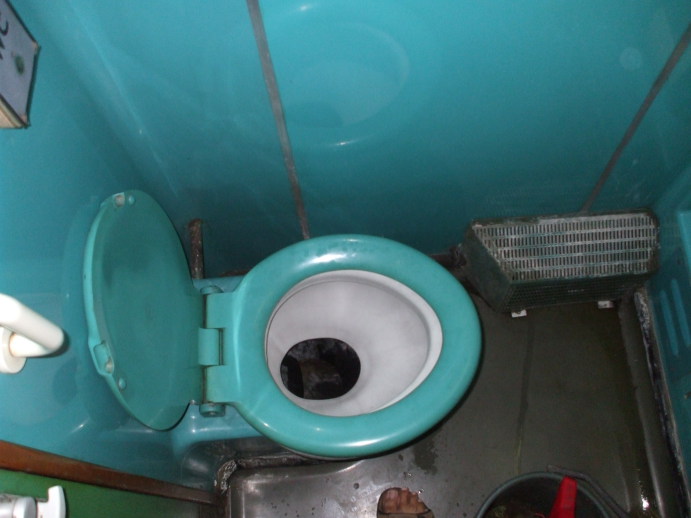
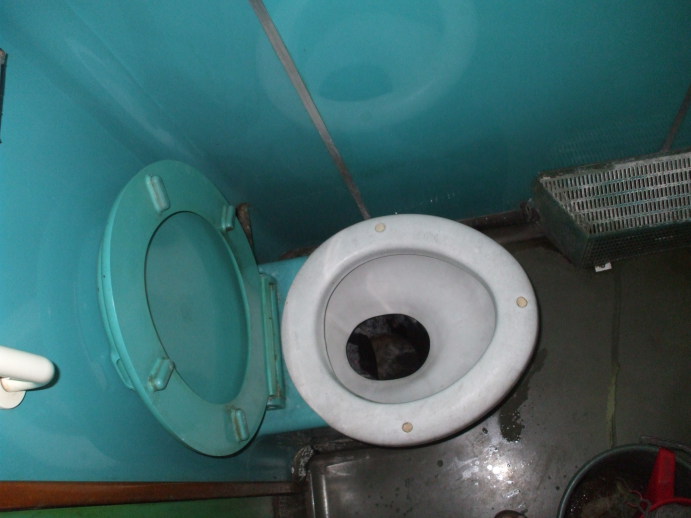
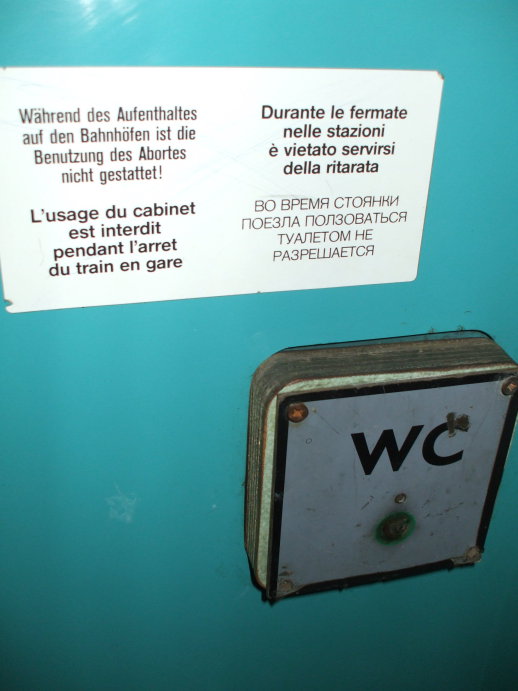
It's just the standard straight drop onto the tracks, so you are warned in several languages not to use it in the station, as seen below.
This train leaves Thessaloniki at 0030, spends about 0300-0350 crossing the border, and arrives in Sofia at 0805.
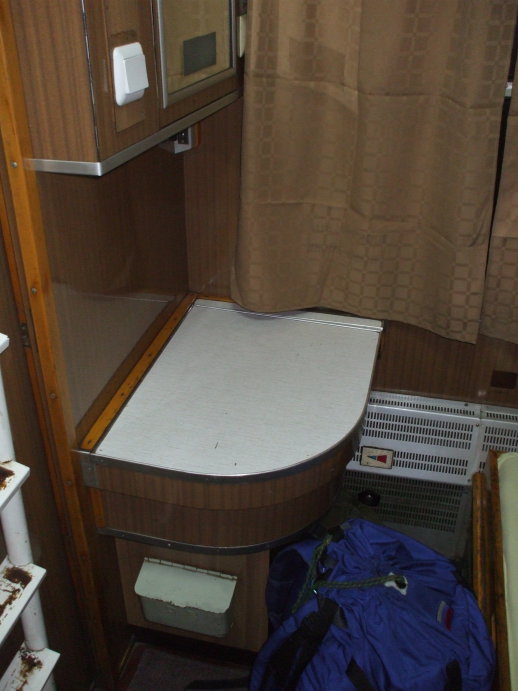
The sleeper compartments are very nice.
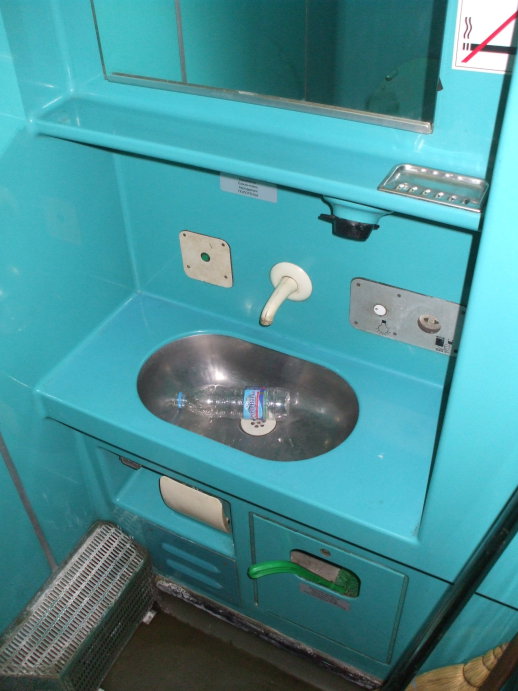
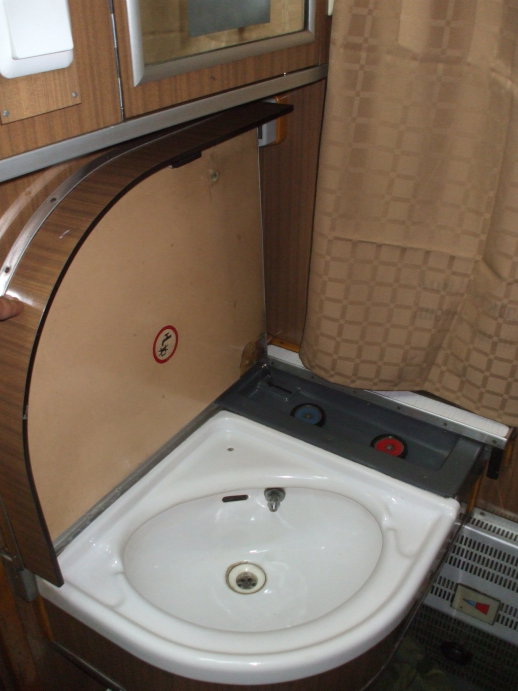
And to be complete, here is the sink in the compartment.
Closed, it's a desk.
Open, its about to suddenly slam shut.
Well, the intent is that open, it's a sink. With non-potable water, as it warns.
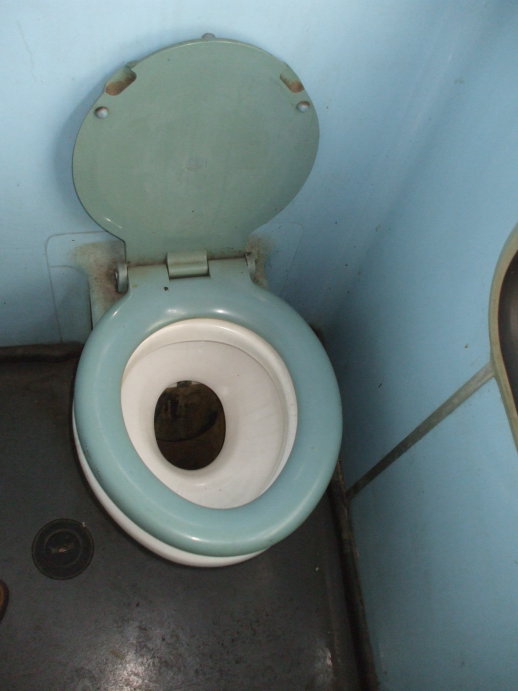
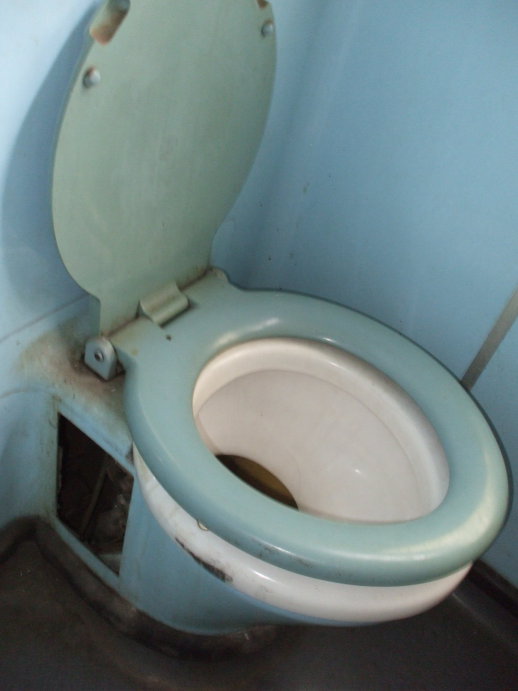
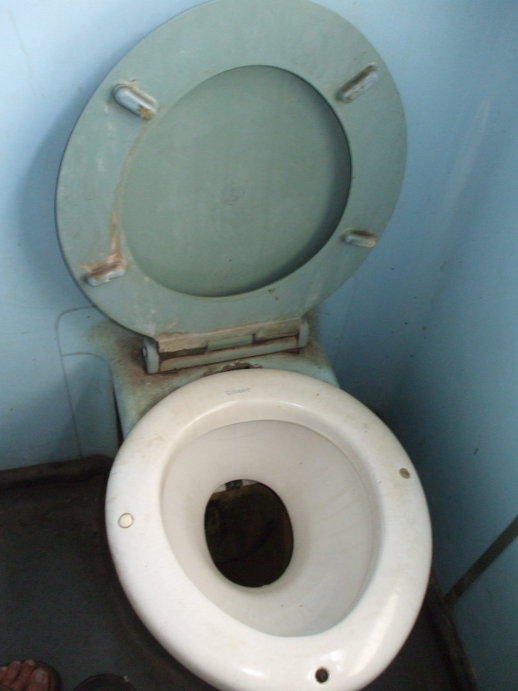
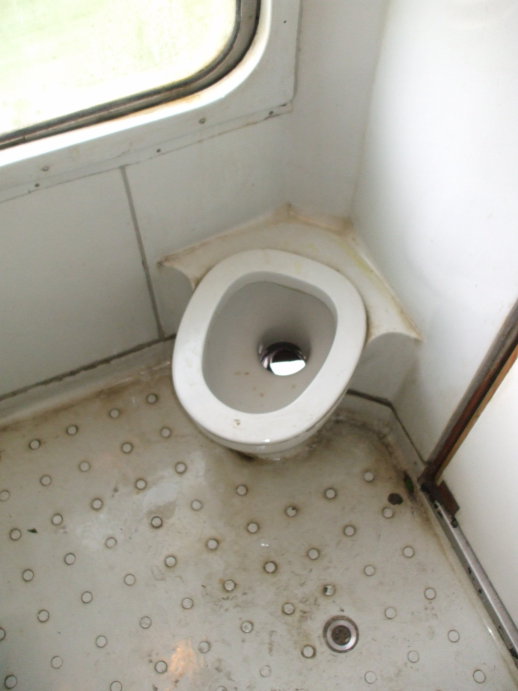
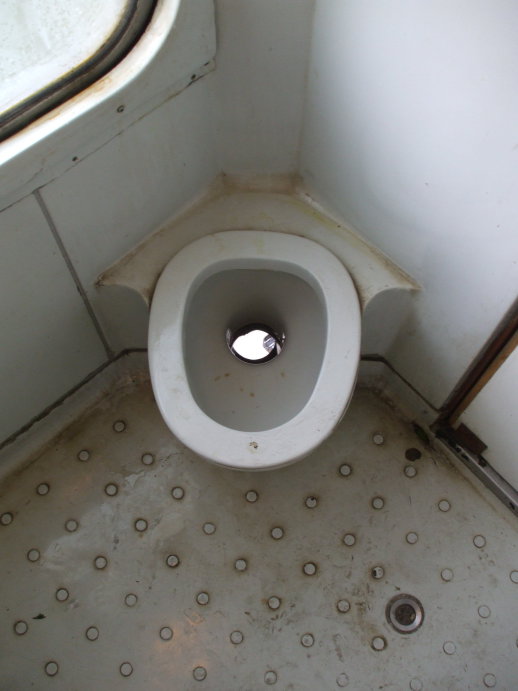
This toilet is on board the train from Sofia to Varna, by way of Gorna Oryahovitsa.
I took the second picture to better capture the view straight out the bottom of the pipe. This is why you aren't supposed to use these when the train is in the station.
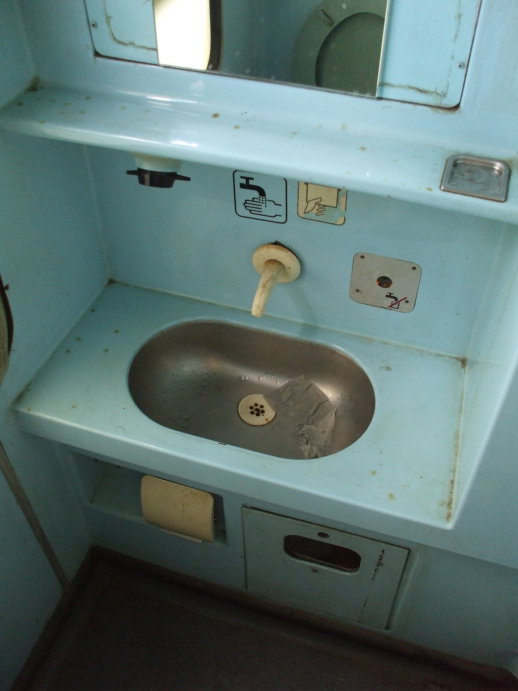
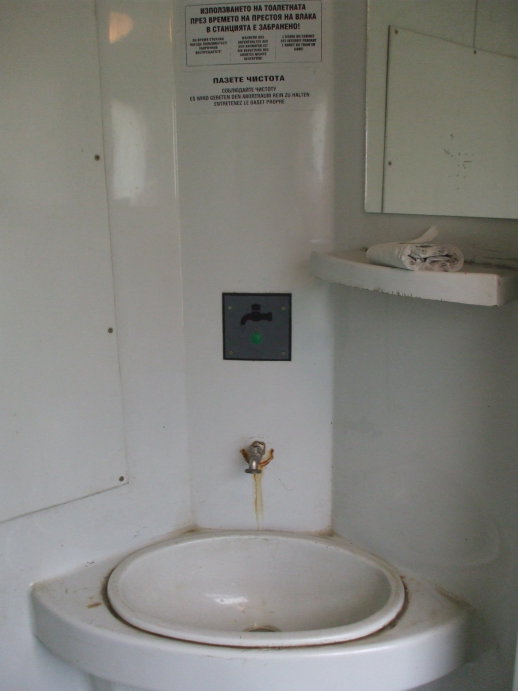
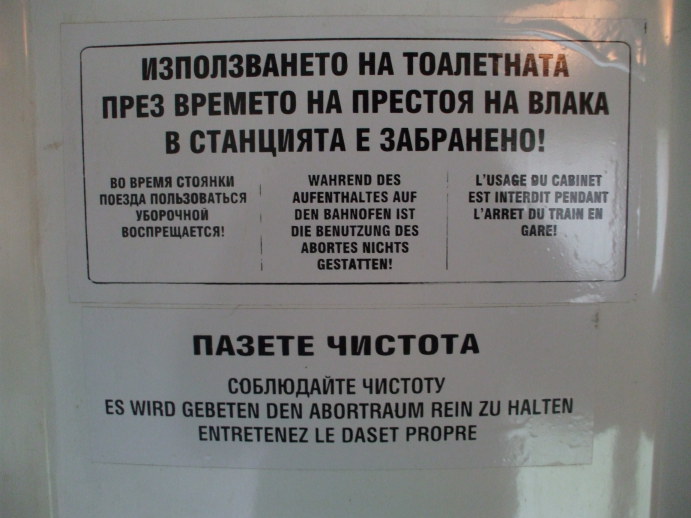
This sign above the sink tells you to refrain from using the toilet when the train is in the station. It's in Bulgarian (of course!) plus Russian, German, and French. It also asks you to clean up after yourself.
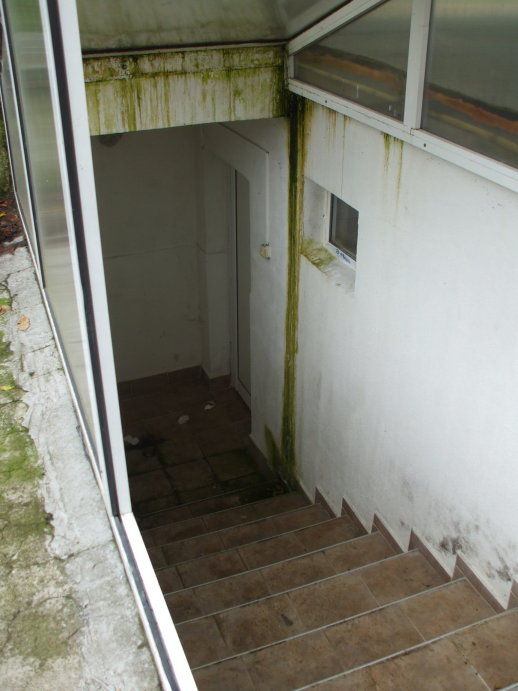
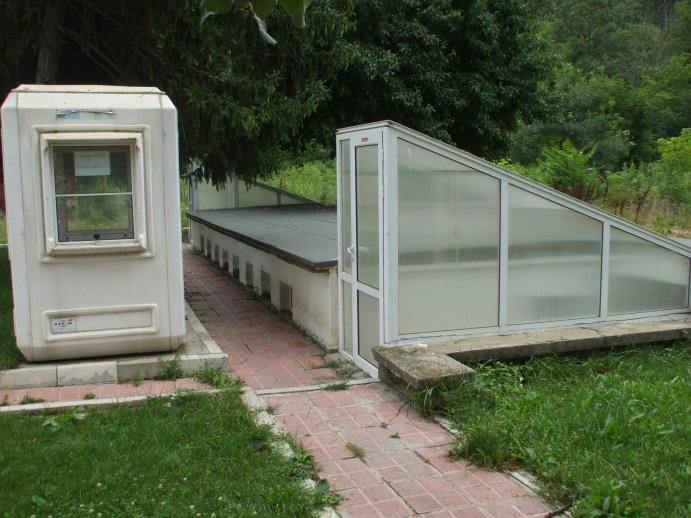
The train station in Veliko Târnovo has a pair of public restrooms outside the building in an underground bunker with entrances like those on subway stations. But it was unfortunately all locked up. No pictures from inside.
The Bosfor Ekspresi is a Turkish train that runs from İstanbul to Bucharest, Romania. It leaves İstanbul with a sleeper car, a couchette car, and a coach car.
In Gorna Oryahovitsa, in central Bulgaria, it merges with a train out of Sofia. The train from Sofia is based on one that originated in Thessaloniki, Greece, and left its sleeper cars back in Sofia. The Bulgarian coaches and the Turkish sleeper and couchette are combined and pulled north toward Bucharest by a Bulgarian locomotive. Before crossing the Danube River into Romania, the Bulgarian locomotive is replaced by a Romanian one.
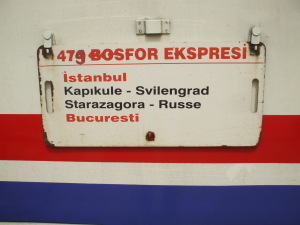
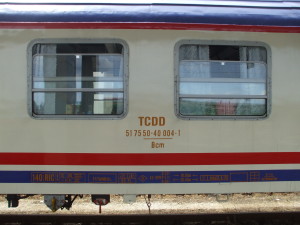
So, is this a Turkish train, a Bulgarian train, or a Romanian train? Yes!
The sleeper and couchette are definitely Turkish as they're owned by TCDD, the Turkish national rail company. And, its toilet at the end of the couchette car is in the Turkish style.
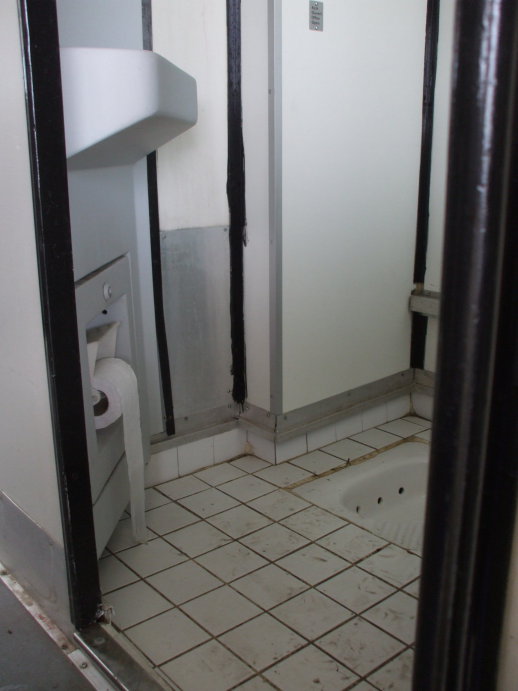
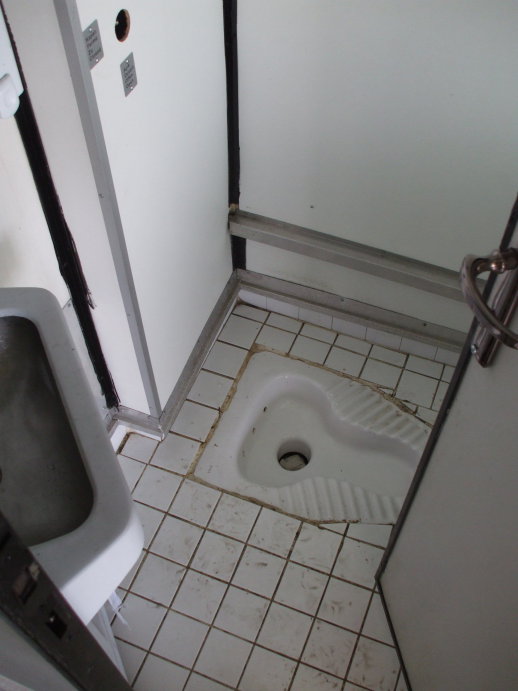
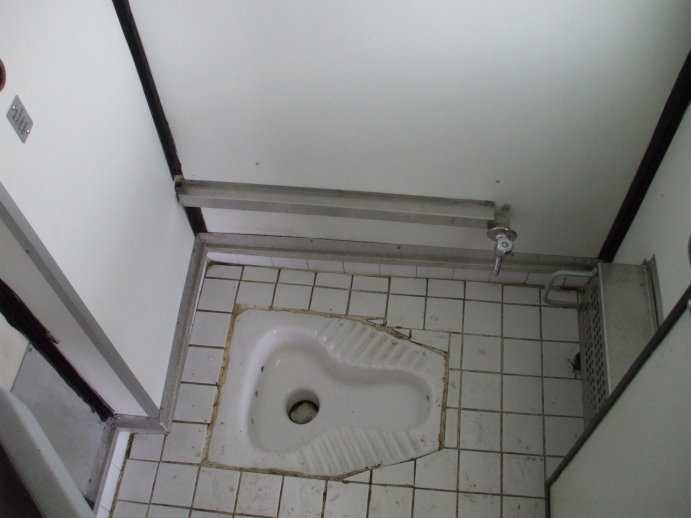
If you get on at Veliko Târnovo, you take a temporary seat in the coach. You're herded out onto the platform at Gorna Oryahovitsa as the Turkish coach is pulled off the train to wait to be connected to the next Bosfor Ekspresi bound back to İstanbul.
You're then told by the Bulgarian conductor to sit in an empty seat in the couchette car, as it will be an hour or so before the joining train arrives from Sofia. That gives the Turkish conductor plenty of time to try to scam you into paying a couchette supplement as, according to him, there will be no coaches arriving. Ignore him, it's a scam, and a rather clumsily attempted one at that.
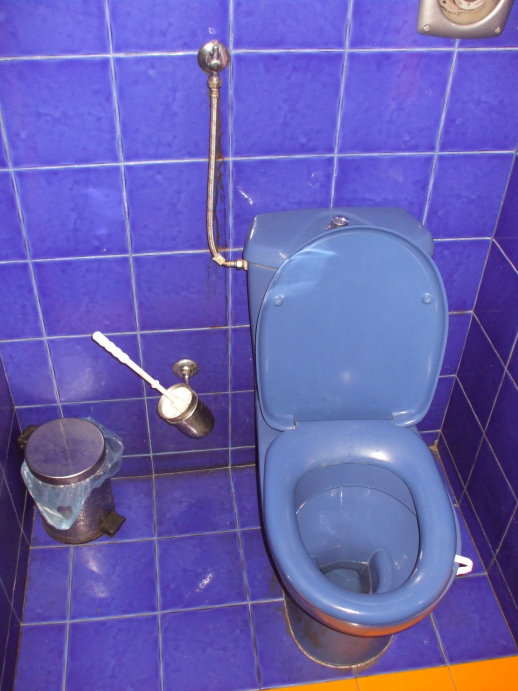
Eventually the train from Sofia arrives and the two trains are merged. Then you find a Bulgarian owned coach with your assigned seat. And, the typically blue Bulgarian train toilet.