
Italian Toilets and Other Plumbing
Italian Plumbing
The peninsula of Italy has a long lavatorial history, what with the Romans and their obsessions with water.
Roman Water
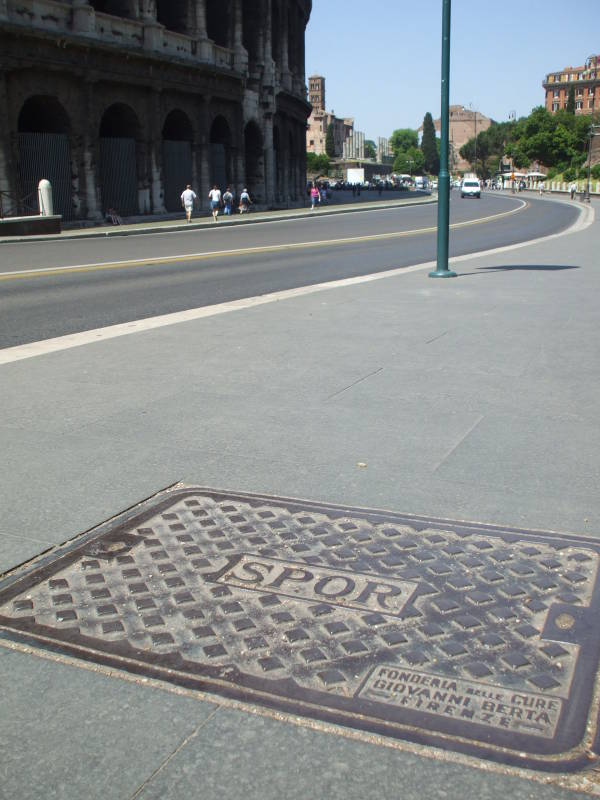
The official signature of the government of Republican Rome was SPQR, standing for Senatus Populusque Romanus or "The Senate and the People of Rome".
"SPQR" is now the motto of the city of Rome, and it appears on the city's coat of arms, many of its civic buildings, and its manhole covers.
Logistics
| Where is the toilet? | Dov'è il bagno? |
| MEN | UOMINI |
| WOMEN | DONNE |
Senate
Latrine
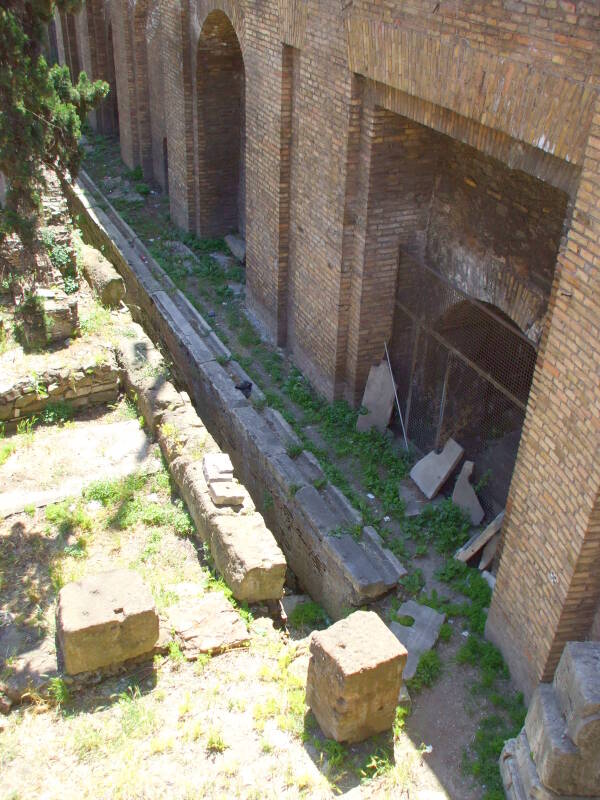
Some Italian toilets are quite old. These are the public latrines next to Pompey's portico in Rome. This portico was used for meetings of the Roman Senate. This is where Julius Caesar was assassinated on 15 March 44 BC.
I have a whole page featuring these ancient latrines.
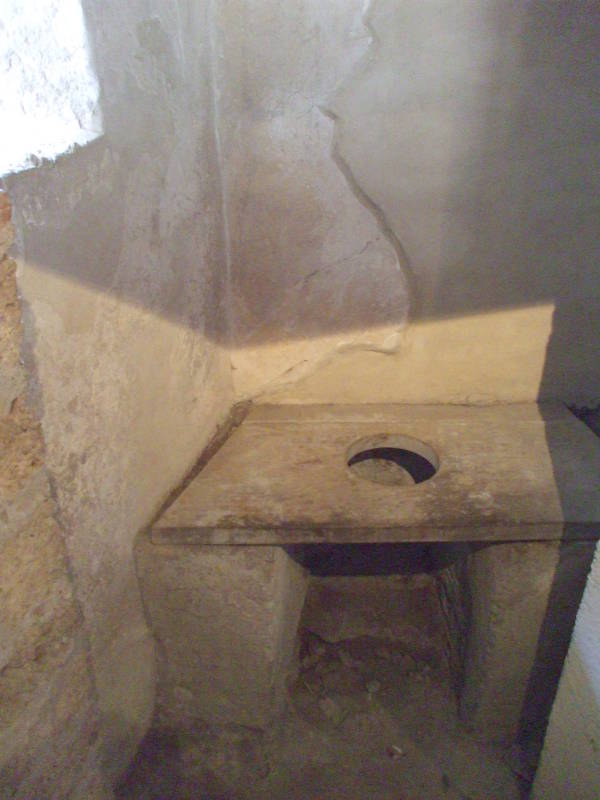
If you are interested in historical toilets, you will want to see the toilets and other plumbing of Pompeii. This is the indoor toilet from the famous two-story brothel, the Lupanaro.
And for historical toilets in general, browse that category in the comprehensive navigation menu at the bottom of each page.
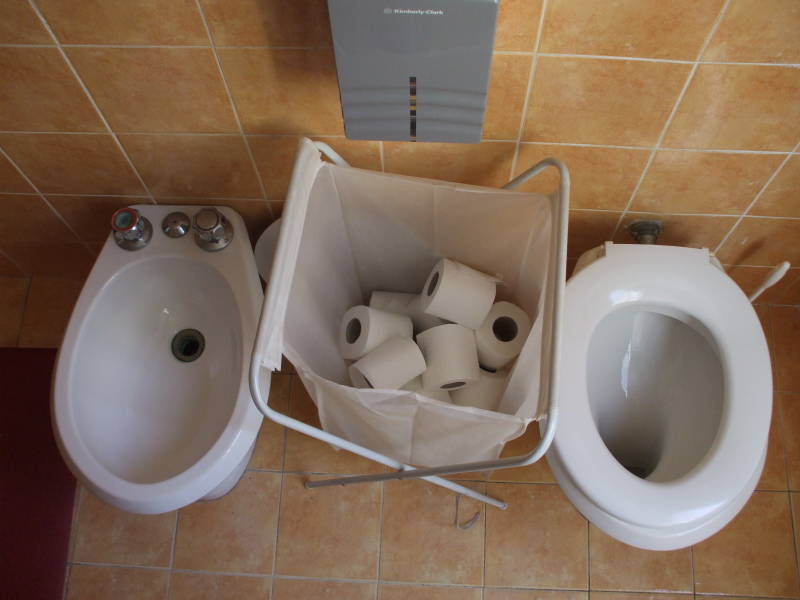
This very well supplied toilet and bidet are in the Fawlty Towers hotel in Rome.
Really, an entire laundry hamper filled with toilet paper! They take good care of you there.
See the dedicated page for more about bidets.
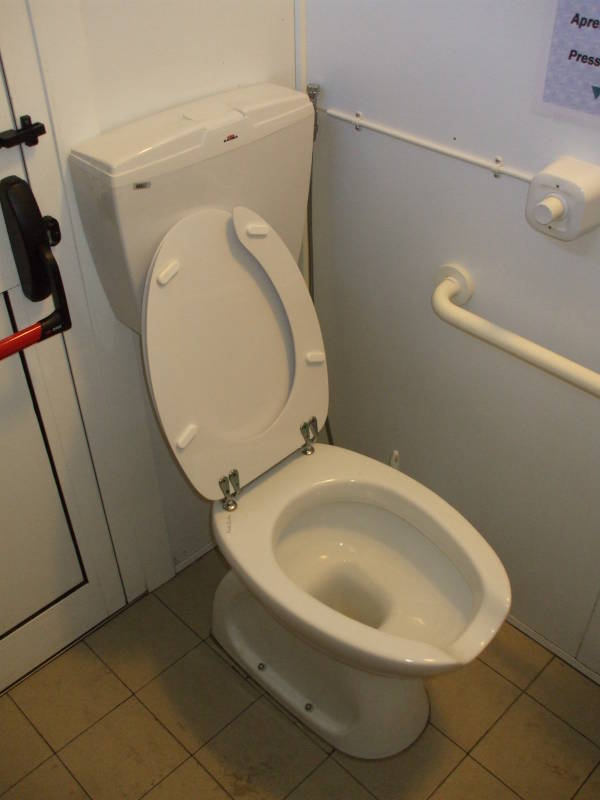
Italian truckstop toilets are much cleaner than the American variety.
This is along the main motorway between Siena and Firenze.
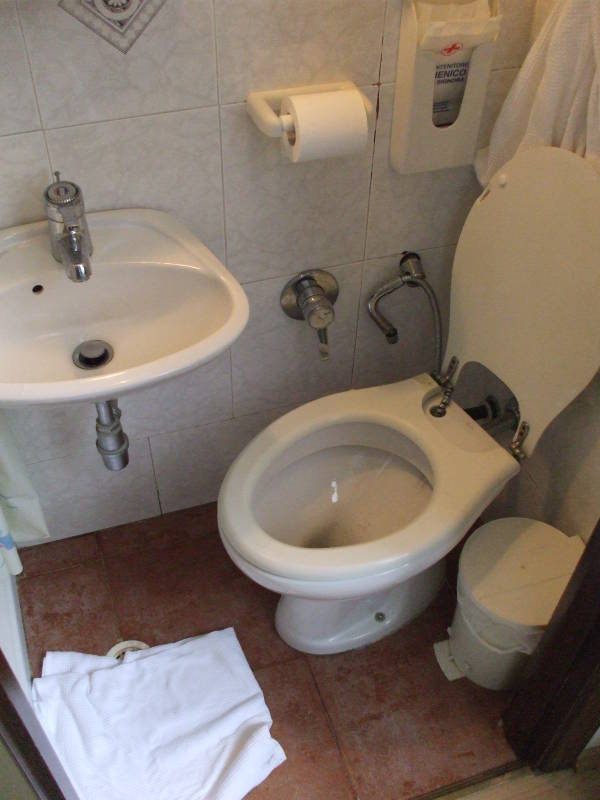
This very nice bathroom at Albergo Anna in Perugia shows several common features of Italian bathroom design.
First, it doesn't take too much space as it is very efficiently put together. Maybe more so than you would expect, as the sink is more or less in your lap when you sit on the toilet.
Second, there is not a separate bidet but there is a small sprayer on a flexible hose. Be careful not to bump its valve handle by accident! I had a few accidental random sprayings of my bathroom.
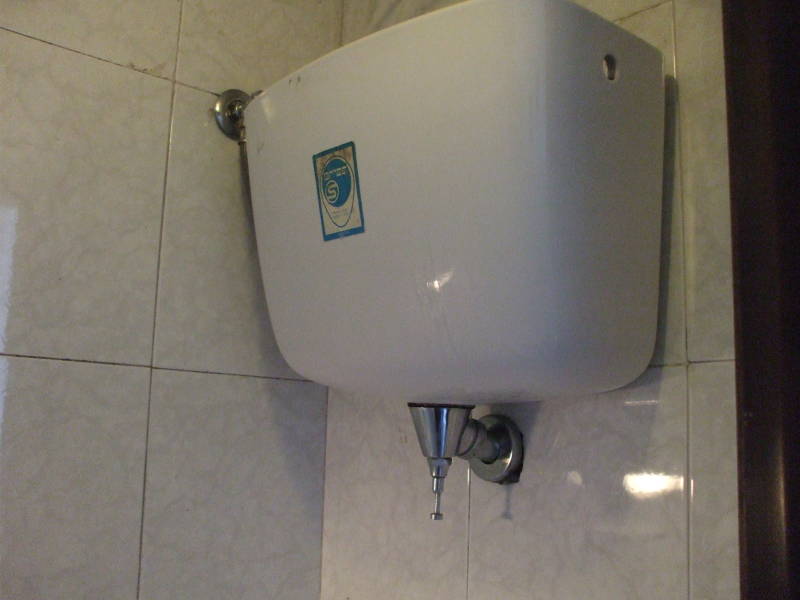
The tank is mounted high on the wall. It is flushed by pushing up on the plunger button. If you just need a small flush, you can pull that plunger back down and stop the flush at that point.
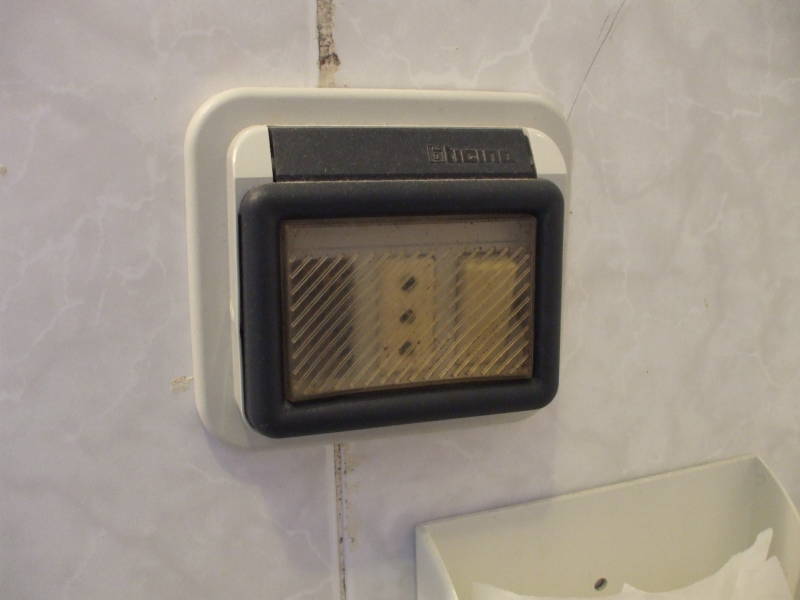
The light switch and electrical outlet are covered by a flexible transparent panel. You can turn the light on and off without raising the cover.
See the dedicated page for more about bidets.
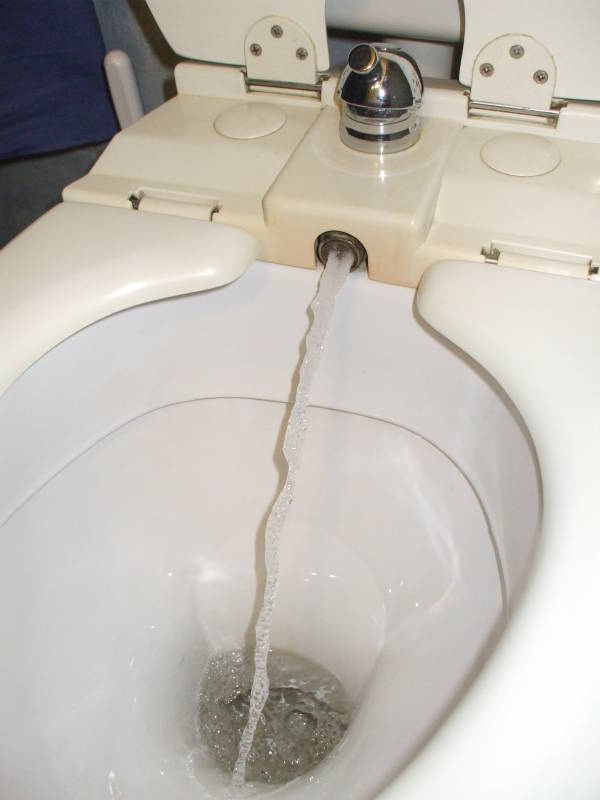
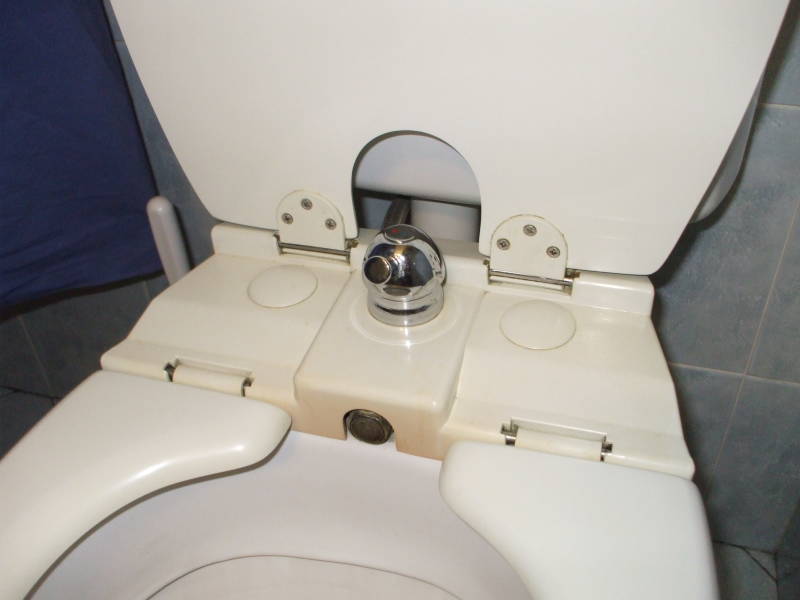
This toilet at Hotel Acquaverde in Genova has a bidet system built into its seat.
The rather small ball-and-knob control adjusts flow and temperature. Up to start and increase flow, left for hot and right for cold. Of course, I doubt that you really want either hot or cold, you want some pleasant temperature in between. That's why it's made to allow temperature adjustments!
See the dedicated page for more about bidets.
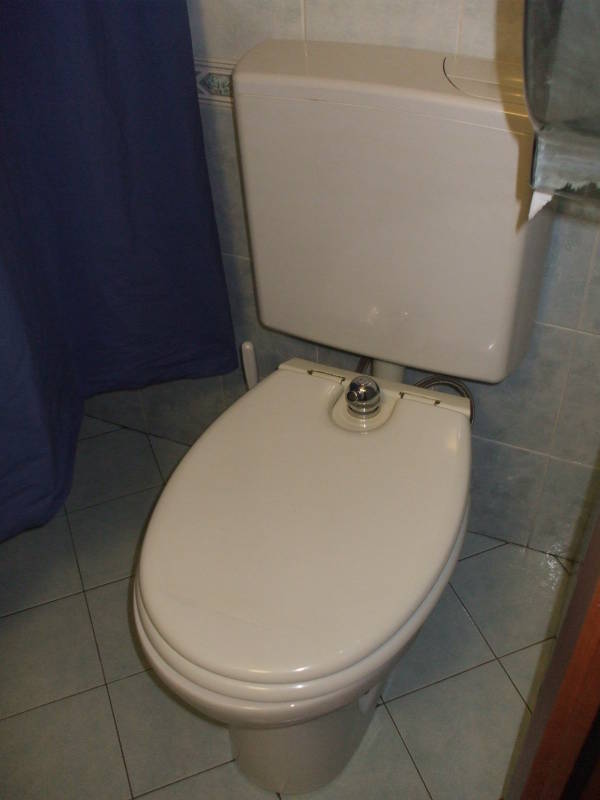
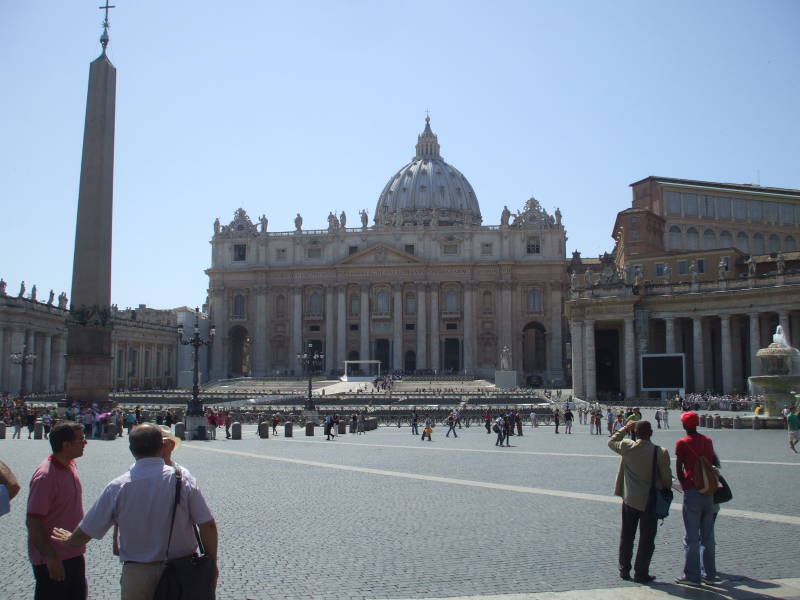
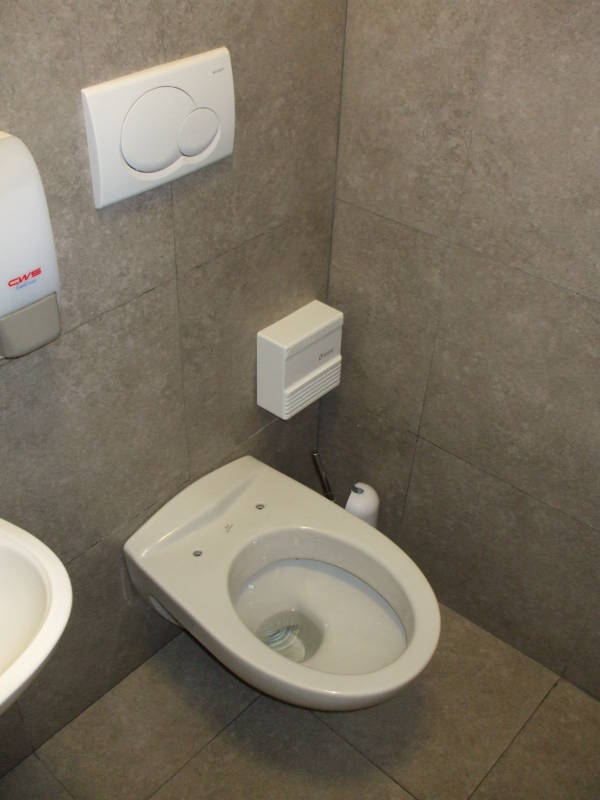
This is a toilet in the Vatican.
Don't get excited, this isn't the Papal Throne! This is just a toilet in the Vatican Museums.
Seatlessness is next to cleanliness. That's the common configuration for Italian public toilets.
This toilet gets a lot of use, and it gets more every year. 4.3 million people visited the Vatican Museums in 2007, and just over 5 million in 2011.
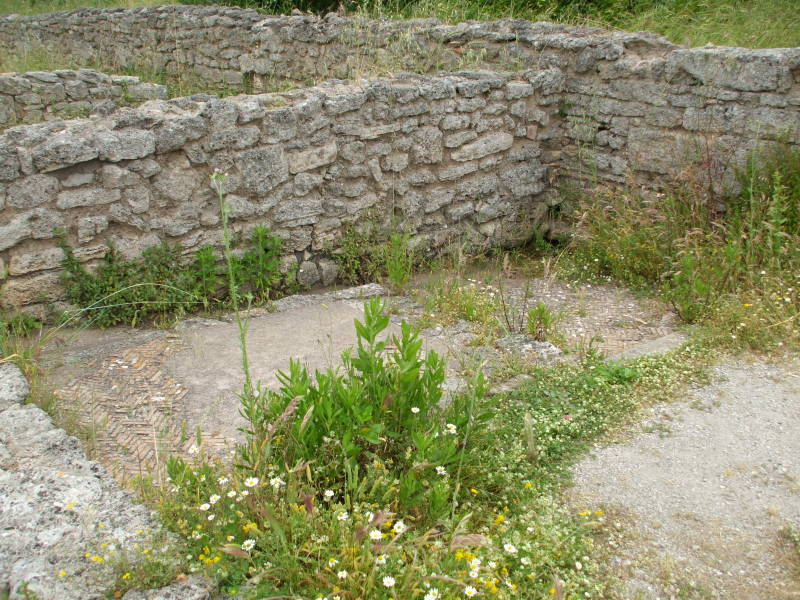
Above is a likely toilet location in Paestum, the Latin name for Poseidonia or Ποσειδονια, part of Magna Graecia.
I have a whole page on Paestum and its plumbing.
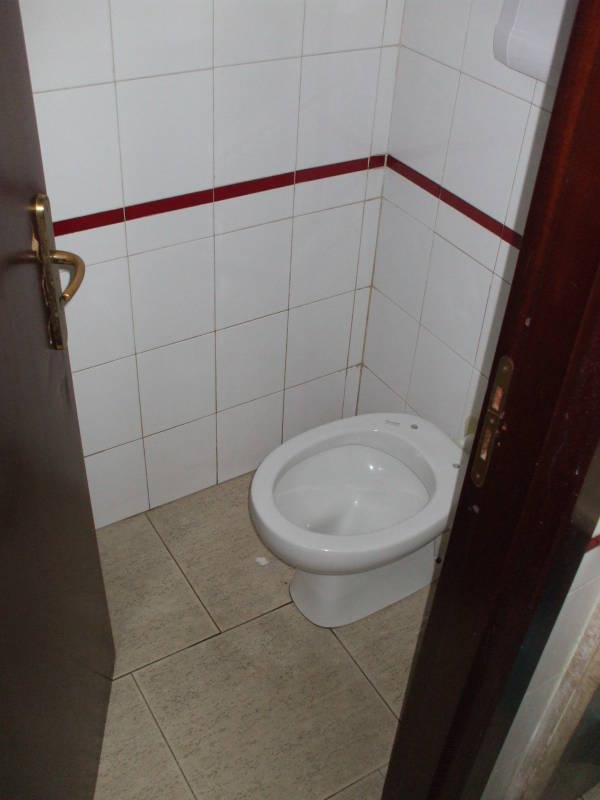
The next one is the toilet in the Magna Grecia Cafe just outside Paestum.
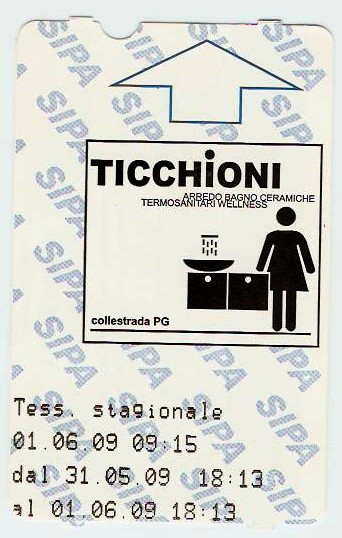
Sometimes in Italy, as in other places, you have to pay to go.
This ticket would get you into the public facilities outside the lower station of the funicular railway leading up to Orvieto, in southwestern Umbria.
TICCHIONI
ARREDO BAGNO CERAMICHE
TERMOSANITARI WELLNESS
Italy has a good train system, click here for pictures and details on Italian train travel.
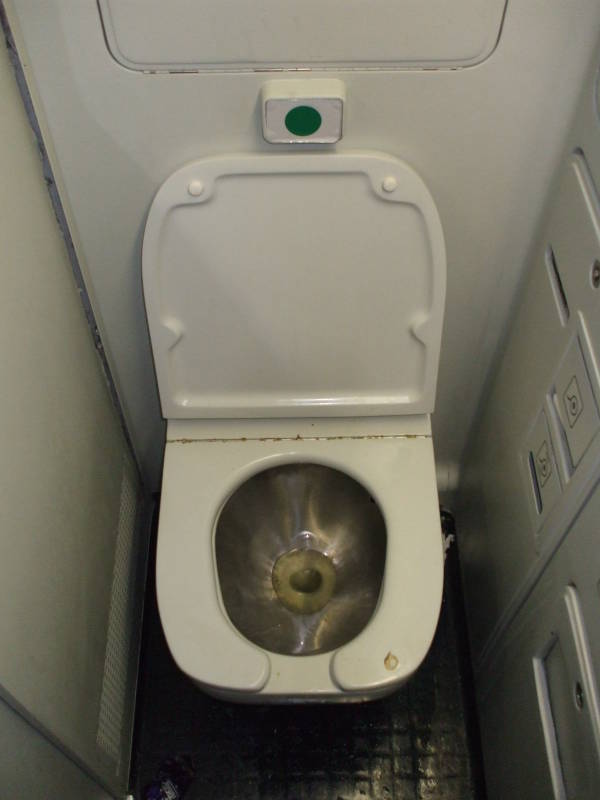
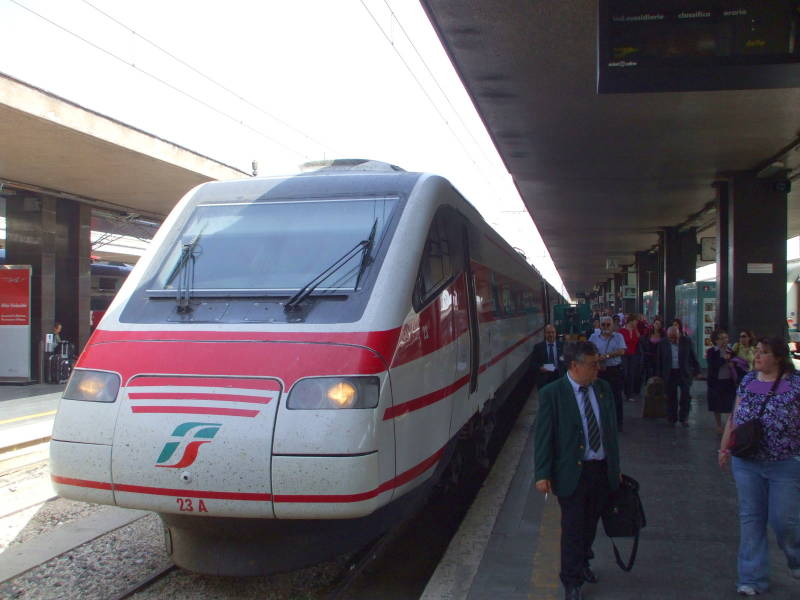
This toilet on board an inter-city train between Firenze and Pisa is modern, clean, and it has a holding tank.
The simpler toilets below are on board a regional train running along the coast from La Spezia through the beautiful Cinque Terre coastal region.
There's no holding tank, just a simple drop right onto the tracks, but it's reasonably functional.
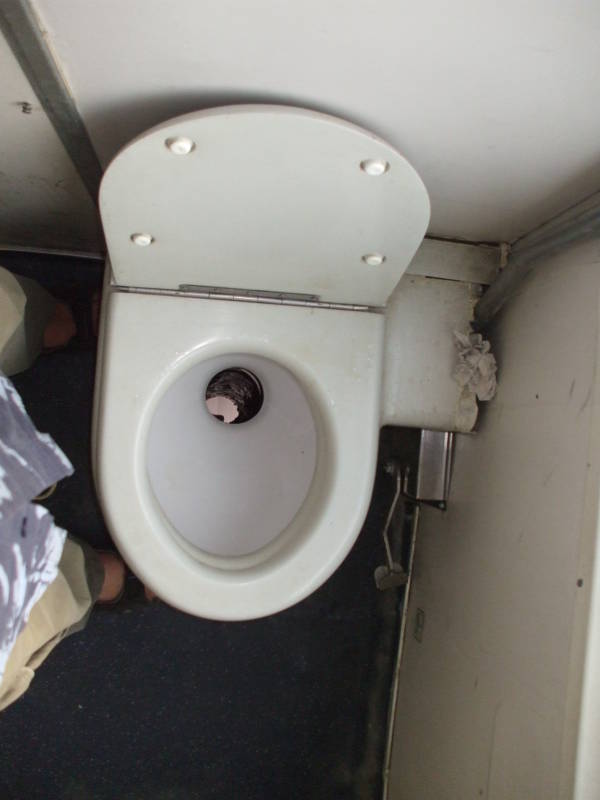
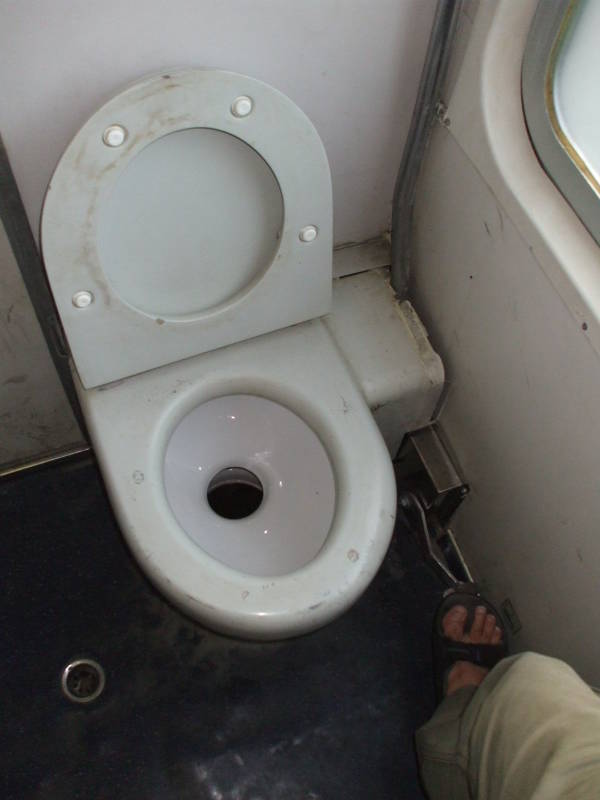
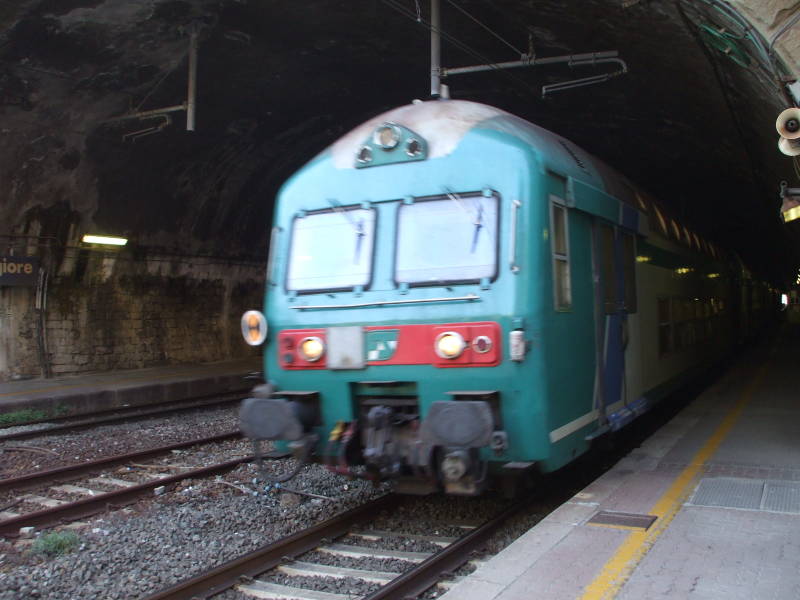
This is the worst train toilet I have ever encountered, on a regional Italian train out of Firenze.
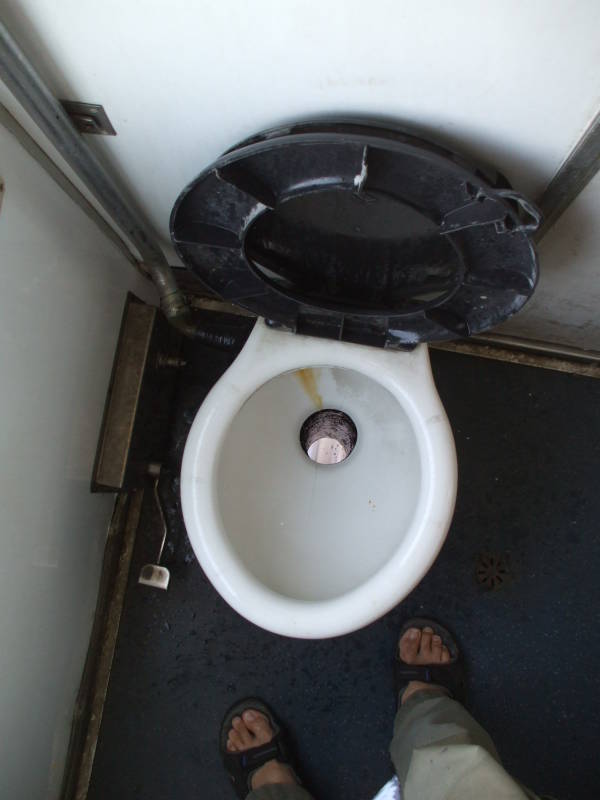
It looks ordinary — a simple drop straight onto the track, much like the one just above. The slightly different seat design appears to be the only difference. Oh, if only that had been true....
I took this picture before using the toilet, and I was the first person to use it after the train had been sitting in the station for quite a while. So, things were reasonably clean. The drain pipe had dried, a crucial aspect of what was to come.
The problem is that the drain pipe seems to be directional. It is supposed to draw air down the pipe like a chimney, pulling waste and air down the toilet, out of the compartment, and onto the tracks.
The problem was that this one was forcing air up the pipe, with an effect that you can probably imagine but might prefer not to.
Full speed operation forced a very brisk air flow up the pipe. The result was a high-speed urine fountain. Closing the seat and lid just slightly changed the direction of flow — rather than spraying straight up, it now came out horizontally about knee high. The high air speed made for very fine droplets that more easily stayed airborne.
By the time we got into the next city, the interior of the toilet compartment had been coated in a fine mist of urine. It was a fairly long trip, people had had to use it and recharge the fountain.
Fountains
The ancient Romans loved water, and they were quite good at hydraulic engineering. Water from many springs outside Rome, some at quite a distance, were brought into the city via large aquaducts.
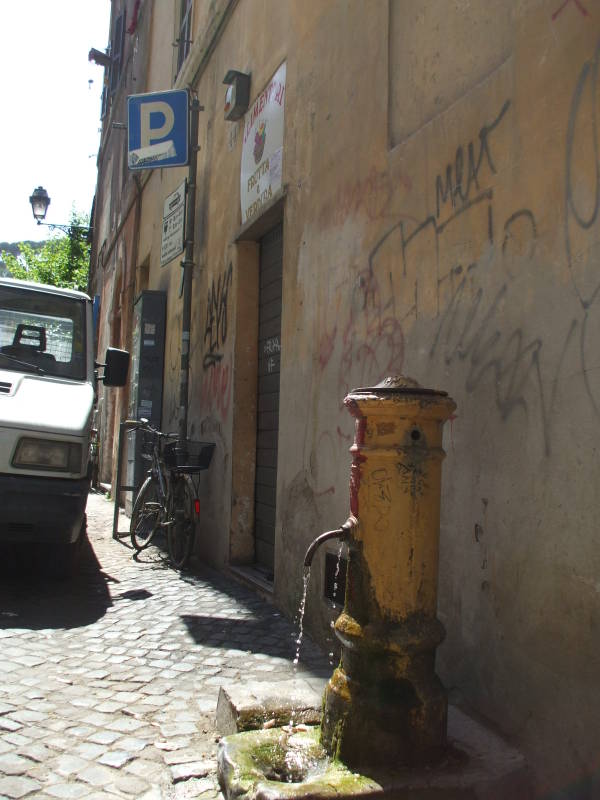
Fresh cool water still flows constantly from the many fountains in Rome. Hot visitors can refill their water bottles, or wash their hands when they're sticky with gelato, or wash their feet, or whatever.
The first example is from the Trastavere district of Rome, west of the Tiber.
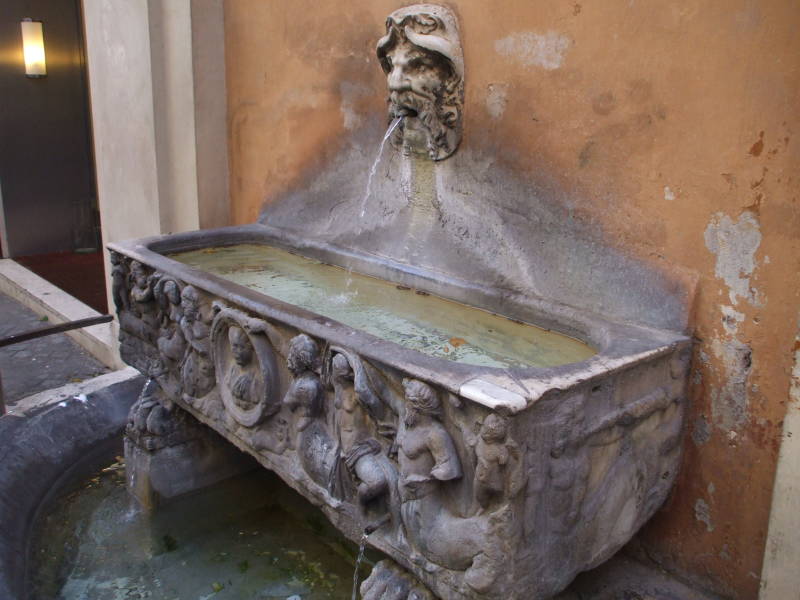
The rather ornate one is along Via Condotti in Rome, near the headquarters of the Sovereign Military Order of Malta. What is S.M.O.M.? It seems to be some sort of holdover from the Crusades, retaining claims of sovereignty and with permanent observer status at the U.N. It is still an important provider of first aid training and emergency medical services in many countries, including Ireland, Germany, and France, and it runs medical relief missions world-wide.
Since their loss of the island of Malta in 1798, their international status has been a bit vague. The order operated from Rhodes 1310-1523 and from Malta 1530-1798. Then Napoleon captured Malta in 1798 and France took over.
Now the SMOM has a couple of headquarters buildings granted with extraterritoriality status.
They operated hospital trains in both World Wars. 36 military aircraft were transferred from the Italian Airforce to SMOM in the peace treaty ending World War II. One is now in a museum, the other 35 of those have been retired, but the order still operates some aircraft bearing the military insignia of the military order.
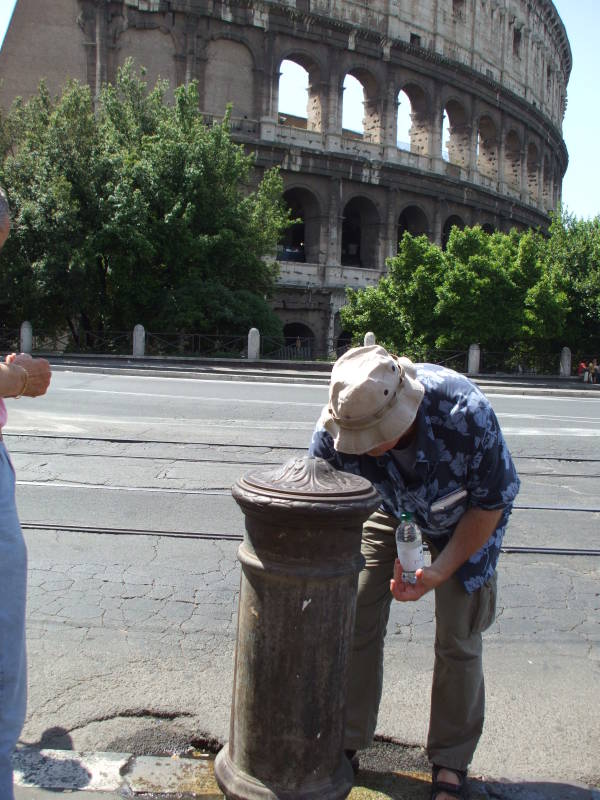
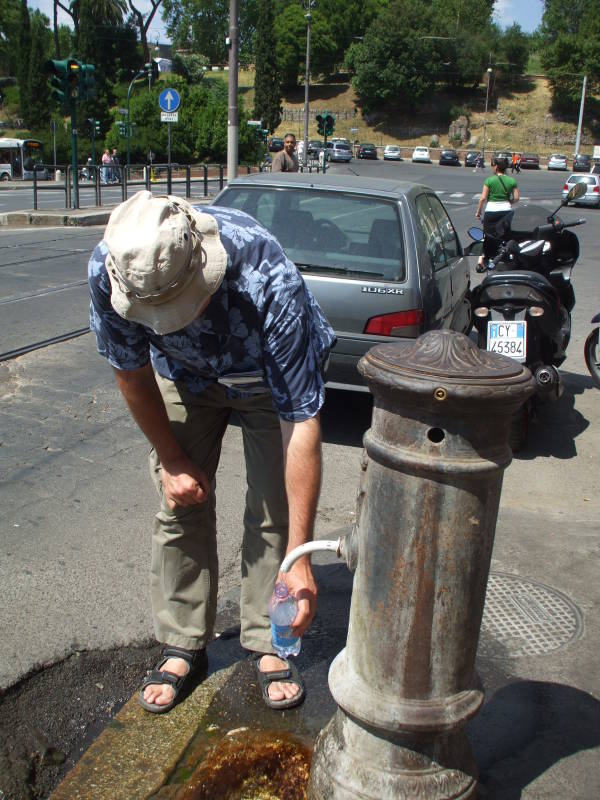
The fountains above are near the Colosseum in Rome. I'm demonstrating the ease of refilling my water bottle with cold, clean water.
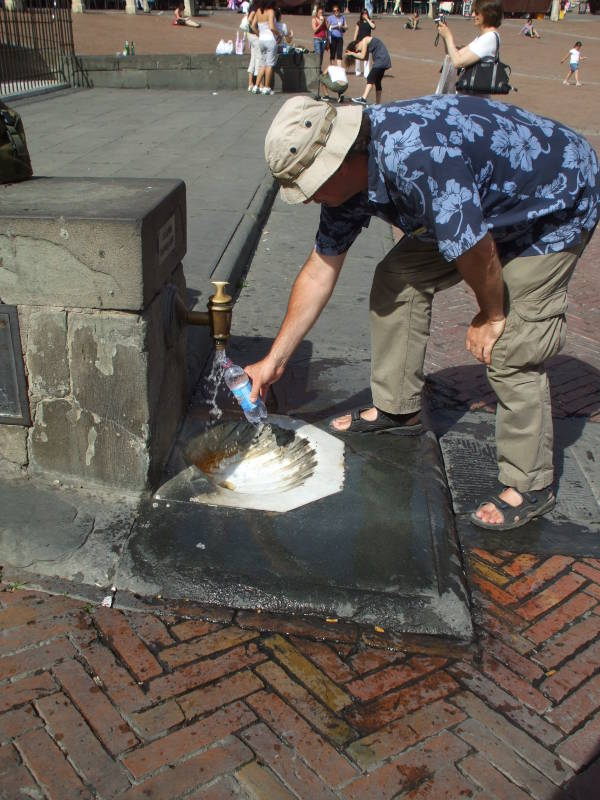
This one below is in Siena, another Italian city with lots of fountains supplied by aquaducts and tunnels bearing water from mountain springs in the region.