
Egyptian Toilets
Egyptian Toilets
Egyptian toilets tend to be pretty minimal. Unless you're in a place catering to western tourists, it's all squat toilets instead of raised commode seats, and water instead of paper. Done right, this can make for a very clean toilet. Of course, in Egypt many things are not done right. Here is a selection of Egyptian toilets, from Dahab and a mountain summit in the Sinai peninsula, to a train along the Nile River, and a ferry to the Jordanian port of Aqaba.
Dahab, on the east coast of the Sinai Peninsula in Egypt, is a great place to relax.
The so-called Bedouin village up the coast from the luxurious resorts is the best place to stay.
Here is a shower and toilet at the Muhamed Aly camp in the Bedouin village area.
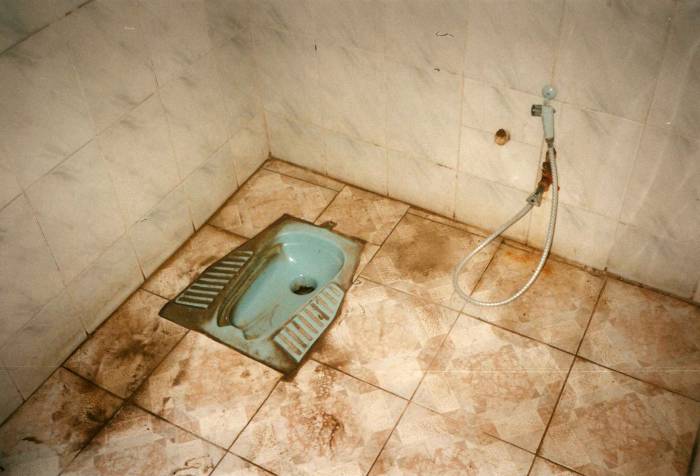
This is a classic floor-mounted squatter with integrated plumbing.
The shower head mounts on the wall of the room, and the toilet drains the entire room. The hose/sprayer also reaches the toilet itself for hygenic purposes.
This is excellent by Egyptian standards, but then it's in Sinai and not along the Nile. By the way, Dahab is on the beach, and that's sand you see there!
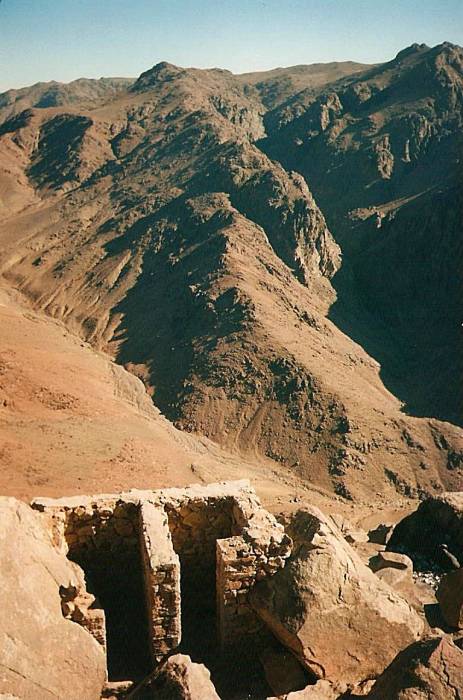
This pit toilet has been constructed from local loose stones, just below the summit of Mount Sinai, Egypt.
It's not actually from the era of Moses, thought to be approximately 1450 BC, but the mountain has been a major pilgrimage site at least since when the Byzantine Empress Helena (ruled 313-328 AD) established a monastery at the base of the mountain.
You would think that during close to 1,700 years they'd have had time to put doors and a roof on the thing!
And yes, the sani-flush blue background does indicate that I have used this toilet, just as it means on all my other pages.
See pictures of my trip to Egypt for much more on Mount Sinai and Mount Sinai Egypt in general.
Also compare this to the pit toilet in the Besparmak Daglari of Turkey.
This one is also filed under Toilets of the Hebrew Bible as well as Loos With Views.
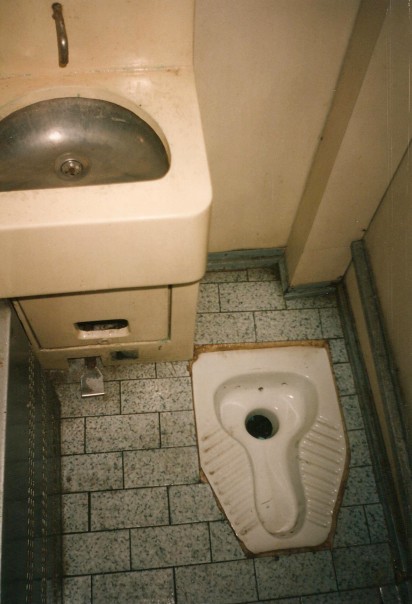
This squat toilet is found on board the Egyptian passenger train on Aswan-Luxor-Cairo route paralleling the Nile.
Although this was an express train, and thus far superior to local service, there was something dreadfully wrong here.
No Egyptian train toilet is supposed to be this clean!
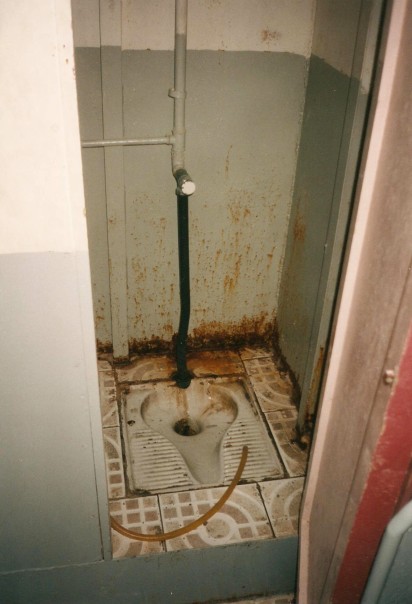
This toilet is on an Egyptian ferry on Nuweiba-Aqaba route between the Sinai and Jordan.
It has no sprayer, but at least there's a hose.
This is actually pretty nice by Egyptian public toilet standards.
And I must emphasize that it's rust you see there!