
Trompe l'œil Toilets
or
Ceci n'est pas une toilette
Ceci n'est pas une toilette
René Magritte was a famous Belgian surrealist artist (and also see the Peeing Figures in Art page for further absurdism related to toilets).
One of his most famous works is La Trahison des Images, known in English as The Treachery of Images. It's the painting of a pipe, with the label Ceci n'est pas une pipe, or, in English, This is not a pipe. Magritte's point was that it was not a pipe, it was a picture of a pipe.
The whole point of trompe l'œil (or "trick of the eye") art is convincingly realistic rendering. See, for example, the Warner Brothers cartoons in which Wile E. Coyote creates a trompe l'œil image of a tunnel on a rock face at the end of a dead-end road. The Roadrunner can enter the tunnel but the Coyote cannot. And — unfortunately for the Coyote — large trucks, buses, and trains can suddenly exit the image.
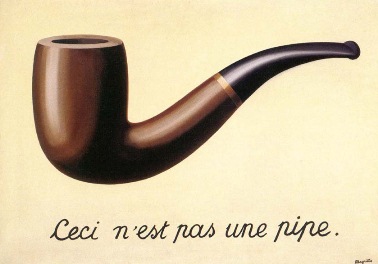
Here is an example of trompe l'œil artwork in the toilet. This is one of the toilets at the Castle Rock Hostel in Edinburgh, Scotland.
Approaching...
Entering...
And the view from the loo.
Obviously this one needs the blue Sani-Flush border indicating one that I've used...
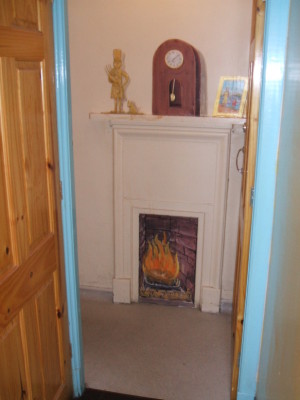
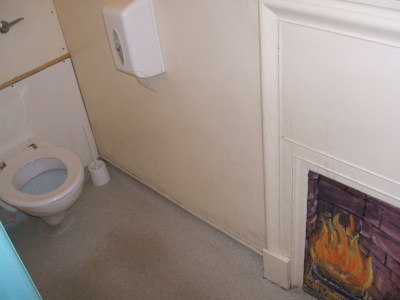
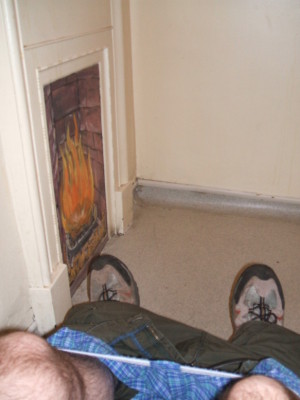
So is this really a trompe l'œil toilet? The thing I was photographing was a trompe l'œil fireplace next to a real, functioning toilet.
I will use Magritte's argument to say that my page is correctly titled. The toilet was a real toilet, yes. But this page is not a real toilet, it a collection of pictures of one!
Of course, you can argue that all my pages are nothing but pictures of toilets, and therefore they are all trompe l'œil toilets. But then this page would contain a picture of a picture of a fireplace, and I'm not sure what to call double trompe-l'œilism. But for a clear case of double trompe-l'œil, look just below!
Also see the British Toilets page.
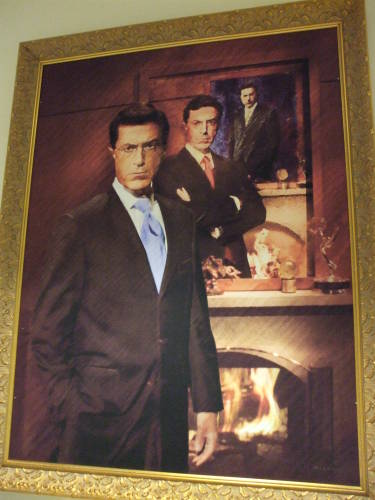
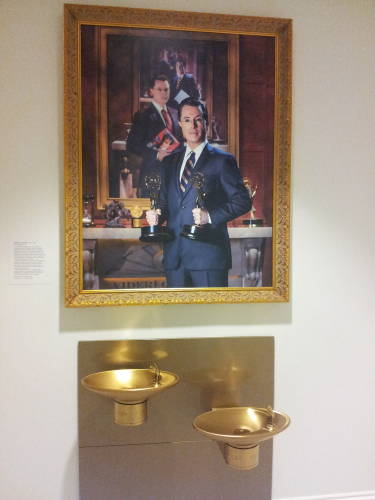
Influential pundit Stephen Colbert graciously donated a portrait of himself to the National Portait Gallery in Washington DC. Then he later donated another portrait of himself. They each hung for a limited time above the water fountains between a pair of bathroom entrances.
The portraits show him standing in front of a fireplace, over which is a portrait showing him standing in front of a fireplace, over which is a portrait of him. Multiple trompe-l'œil!
Amazon
ASIN: B0045W2WBE
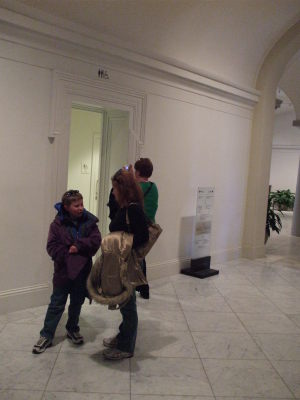
Why is this man photographing the alcove leading to the museum's toilets?
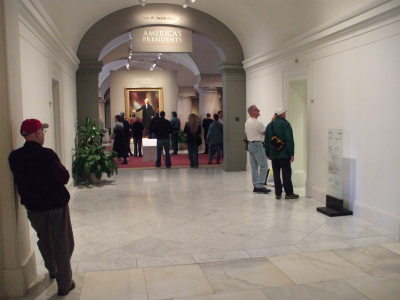
Portraits of Presidents: straight ahead.
Portraits of pundits with failed (so far) Presidential
bids: to the right, in the alcove.